Some pages are not translated outside English yet. We are still working through them.

斋月指南

你作为穆斯林的第一个斋月。

Seasonal guides

什么是斋月?

斋月是伊斯兰历的第九个月,也是全世界穆斯林最神圣的月份。斋月期间,穆斯林每天从黎明到日落禁食——禁食、禁饮和其他身体需求。但斋月不仅仅是不吃东西;这是一个精神反思、自我完善、增加祈祷和加深社区联系的时期。 《古兰经》在斋月期间首次降示,使其成为具有特殊精神意义的月份。

对于新穆斯林

你并不孤单

如果这是您的第一个斋月,感到焦虑或不确定是完全正常的。请记住,您可以进行的任何禁食都是有价值的,并且您可以逐渐增强。不要对自己太苛刻——即使是终生的穆斯林,有时也会觉得斋月充满挑战。

寻找禁食伙伴、导师或社区团体来分享经验。许多清真寺在斋月期间为新穆斯林提供特别活动。你正在承担一些美好的事情,穆斯林社区会在这里支持你。

禁食基础知识

封斋节 (黎明前餐)- 在晨礼祈祷前吃一顿维持性的餐。这对于全天的能量很重要。高纤维和蛋白质的食物可以帮助您保持更长时间的饱腹感。
开斋饭 (开斋)- 在日落时开斋,传统上是用枣子和水。这是先知穆罕默德(愿他安息)的圣行,也是补充能量的快速方法。
要避免什么 - 从黎明到日落,禁止食物、饮料或亲密关系。如果您不小心吃了或喝了东西,您的禁食仍然有效 - 只需停止并继续禁食即可。
谁可以豁免 - 生病、旅行、年长、怀孕、哺乳或经期的人除外。错过的日子可以稍后补上。
意图(Niyyah) - 每晚或黎明前在心里立下一个念头:为了安拉而斋戒。

详细禁食规则请参见斋戒和斋月在主题部分。

Planning your first Ramadan

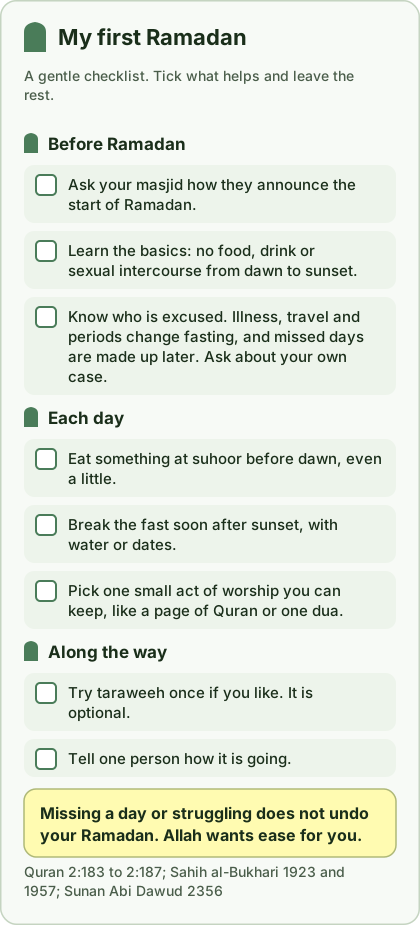
Use these short checklists as a starting point. Ramadan runs a whole month, so there is no need to do everything in the first week.

Before Ramadan starts

  • Ask your masjid how they announce the start of Ramadan.
  • Check the prayer and iftar times for where you live.
  • Plan a simple suhoor you can actually wake up for.
  • Tell work, school, or family only what they need to know.

Your first fast

  • Wake for suhoor, drink water, and eat something steady.
  • Make the intention in your heart to fast for Allah.
  • Break the fast at Maghrib, and do not put it off because you are anxious about getting it wrong.
  • If you make a mistake, ask a qualified person instead of assuming the worst.

Suhoor and iftar

  • Keep suhoor simple: water, protein, fibre, and something that sits well with you.
  • Break your fast gently before you sit down to a big meal.
  • Do not turn every iftar into a heavy social event.
  • If you have medical concerns, speak with a clinician and a qualified religious teacher.

Taraweeh if you have never been

  • Taraweeh is an extra night prayer in Ramadan, usually after Isha.
  • You can stay for part of it and leave quietly when you are tired.
  • Line up with the rows and follow what everyone else is doing.
  • If you are not sure where to stand or sit, ask before it starts.

When fasting is hard on your body

  • Menstruation, illness, travel, pregnancy, nursing, medication, and serious hardship can all affect fasting.
  • Do not settle your own ruling from one short post.
  • Ask a qualified local scholar about missed fasts, fidyah, or making days up.
  • If your health is at risk, get medical advice alongside religious guidance.

A plan for Laylat al-Qadr

  • Choose one simple dua to repeat often.
  • Pray what you can, even two rak'ahs.
  • Read or listen to a small portion of Quran.
  • Give charity if you are able, even a small amount.

The harder questions

These notes are here to get you oriented. Your own fasting case needs qualified religious review, and anything touching your health needs medical advice as well.

If you missed fasts

If illness, travel, menstruation, or another valid reason kept you from fasting, do not guess your way out of it from a short post. Quran 2:184-185 sets the broad rule about making days up for sickness and travel. The specifics of qada, fidyah, pregnancy, nursing, chronic illness, and years that have piled up need someone qualified to look at them.

  • Write down the number of days you are reasonably sure about.
  • Ask a qualified local scholar how your case should be handled.
  • Ask a clinician as well if fasting, or making the days up, could affect your health.
  • Do not treat this app as a calculator or as a ruling for you.

Menstruation, illness, and travel

Plenty of things change whether a person fasts. Menstruation, serious illness, travel, medication, pregnancy, nursing, disability, and long-term health conditions are nothing to be embarrassed about. They are personal cases, and they deserve careful guidance from someone who knows the material.

  • Ask privately if you would rather. You do not owe anyone the details.
  • If your body or your medication is part of the question, bring a clinician into the decision.
  • Follow reliable local guidance rather than measuring yourself against strangers online.
  • Keep worshipping in the ways that are open to you: dua, dhikr, listening to Quran, giving, and being kind to people.

If your first Eid is a lonely one

Your first Eid may feel happy, lonely, or both at once. A small Eid still counts as Eid. Make one concrete plan before Ramadan ends so the day does not arrive with nothing in it.

  • Ask your masjid whether there is an Eid breakfast, convert gathering, or community meal.
  • Message one mentor or Muslim friend before Eid morning.
  • Sort out how you are getting there, where you are praying, and what you will eat.
  • If the crowd gets too much, leave early. Turning up at all is enough.

为斋月做准备

  • 逐渐调整您的睡眠时间表 - 您将在黎明前醒来参加封斋饭。
  • 提前减少咖啡因的摄入量,以避免禁食期间出现戒断性头痛。
  • 提前计划简单、营养的封斋饭和开斋餐。
  • 如果可能的话,让你的雇主或学校知道——很多人都理解宗教仪式。
  • 了解关键的祈求:斋戒的意图和破斋的杜阿。
  • 设定本月的个人目标 - 阅读更多《古兰经》、施舍、改善习惯或加强关系。

斋月期间

精神实践

  • 每天阅读《古兰经》——斋月是《古兰经》的月份,即使每天读几节经文也会有所不同。
  • 增加祈祷次数,尤其是清真寺的塔拉维(Tarawih)祈祷。
  • 经常进行 dua(祈求)——禁食者的祈祷具有特殊的意义。
  • 如果有能力的话,施舍(sadaqah)——本月大力鼓励慷慨解囊。

实用的生存技巧

保持水分!

在开斋节和封斋饭之间喝大量的水。脱水是最常见的挑战,尤其是在漫长的夏季禁食期间。

  • 不要跳过封斋饭——它可以让你精力充沛地度过这一天。
  • 如果可能的话,小睡一会儿,尤其是当你的夜晚因塔拉维和封斋节而变短时。
  • 预计下午的精力会下降 - 尽可能将繁重的任务安排在早上。
  • 用枣子和水开斋——这可以提供快速的能量并遵循圣行。

塔拉维和社区

塔拉维 (Tarawih) 是斋月期间举行的特殊晚间祈祷,在斋月之后举行العشاء(伊莎)在清真寺祈祷。会议可能会很长,但如果您无法在整个会议期间祈祷,请不要担心 - 即使部分参与也是有益的。尝试至少参加一次,体验美丽的社区氛围。

在清真寺和社区中心举行开斋聚会是与他人一起开斋的绝佳方式。您会发现丰盛的饭菜和热情的面孔。这些聚会是斋月最珍贵的部分之一,也是结交新朋友的好方法。

社区提示

考虑寻找一位禁食伙伴或导师来承担责任和提供支持。与他人分享经验会让旅程变得更加轻松。

Laylat al-Qadr(力量之夜)

在斋月的最后十晚,穆斯林寻求 Laylat al-Qadr——权力之夜。 《古兰经》将这一夜描述为“胜过千月”。虽然其确切日期未知,但传统上是在过去十天的奇数晚上(21 日、23 日、25 日、27 日或 29 日)寻找它。许多穆斯林在这些夜晚通过额外的祈祷、阅读古兰经和祈求来增加他们的崇拜。

开斋节

斋月结束时,穆斯林庆祝开斋节——一个标志着斋月结束的欢乐节日。它以早上特别的开斋节祈祷开始,通常在清真寺或露天场所举行大型集会。

  • 穿上你最好的衣服,用“开斋节”(祝福开斋节)向他人致意。
  • 与您的社区一起享受节日大餐 - 开斋节是庆祝和感恩的一天。
  • 如果可以的话,请在开斋节祈祷前捐款 Zakat al-Fitr(一小笔慈善捐款)。详情请咨询您的清真寺。

你赚到了!

开斋节期间情绪激动是正常的,尤其是当您的家人距离很远或不了解您的旅程时。请记住 - 您有一个新社区可供庆祝。去参加开斋节祈祷,享受这一天,并为你所取得的成就感到自豪。

资源

Ramadan Resources by Yaqeen Institute

文章

斋月文章、精神反思以及礼拜和准备的实用提醒。

Source: Yaqeen Institute

Best for: 为斋月做好精神准备

个人禁食例外情况应由合格的当地学者审查。

访问资源

Being Muslim: A Practical Guide by Asad Tarsin

一本实用手册,涵盖新穆斯林和回归穆斯林的崇拜、灵性和社区生活。

Source: Sandala Press

Best for: 一本冷静的基础实体书

用作一般教育,并与当地教师配对解决个人问题。

访问资源

Yaqeen Institute - Dhul Hijjah Resources

文章

精心策划的 Dhul Hijjah 合集,包含反思、提醒和适合初学者的崇拜理念。

Source: Yaqeen Institute

Best for: 为回历的前十天做准备

用它来进行精神准备,并向有资格的人询问个人规则。

访问资源

有关更多详细信息,请探索斋戒和斋月主题页。

Sources used

The worship material here rests on Quran and hadith references, and the practical framing comes from beginner education sources. Ask a qualified local imam about illness, travel, menstruation, medication, fidyah, or missed fasts.