Passo 1 - Antes da oração
Prepare-se com calma
Faça o wudu, encontre um lugar limpo, fique de frente para a qibla e defina no coração qual oração é esta. Você não precisa dizer a intenção em voz alta.
Ferramenta para aprender a adoração
Aguardando revisão de um estudioso
Um passo a passo tranquilo de uma oração simples de duas unidades, com as recitações de que um iniciante precisa e notas honestas sobre quando perguntar a alguém.
Ore com sinceridade enquanto ainda aprende as palavras.
Aprenda a estrutura da oração antes de correr atrás de cada detalhe.
Pergunte a um imã qualificado sobre tudo o que depende das suas circunstâncias.
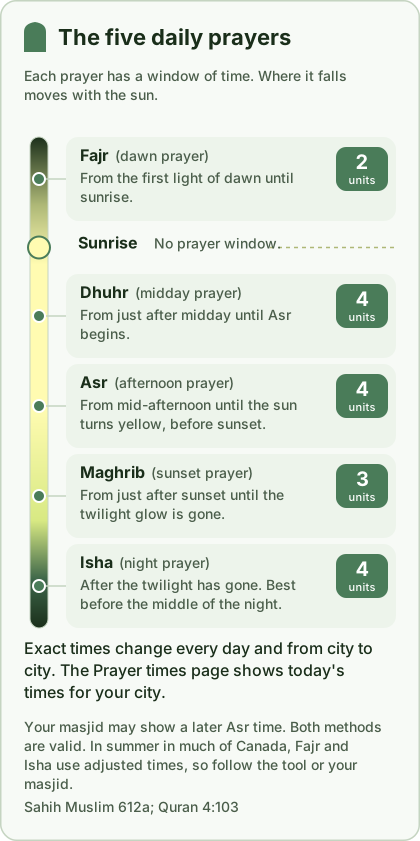
| Oração | Horário | Unidades (rak'ahs) |
|---|---|---|
| Oração do amanhecer (Fajr) | Da primeira luz do amanhecer até o nascer do sol. | 2 |
| Oração do meio-dia (Dhuhr) | De logo depois do meio-dia, quando o sol passa do ponto mais alto, até começar o Asr. | 4 |
| Oração da tarde (Asr) | Do meio da tarde até o pôr do sol. Tente não deixar para quando o sol já estiver amarelado. | 4 |
| Oração do pôr do sol (Maghrib) | De logo depois do pôr do sol até o crepúsculo sumir. | 3 |
| Oração da noite (Isha) | De quando o crepúsculo some até a metade da noite. | 4 |
Você pode orar a qualquer momento dentro de uma janela, então não precisa ser exato no minuto. As escolas divergem sobre quando começa o Asr (na escola hanafi, começa mais tarde) e sobre o horário limite do Isha. No verão, boa parte do Canadá usa regras ajustadas para o Fajr e o Isha, então use a página de horários de oração ou a tabela da mesquita da sua região.
As orações dos anos antes de você se tornar muçulmano não são algo que você deve. O Profeta disse que o Islã apaga o que veio antes dele, então você começa a partir de hoje. Alguns estudiosos acrescentam que um convertido que ainda não sabia que a oração era obrigatória também não precisa repor esse período. Se tiver dúvida sobre como isso se aplica a você, pergunte a um professor.
Isto é um mapa, não um professor. Use-o para aprender a ordem e depois peça a um imã ou professor local que observe você uma vez e corrija.
Passo 1 - Antes da oração
Faça o wudu, encontre um lugar limpo, fique de frente para a qibla e defina no coração qual oração é esta. Você não precisa dizer a intenção em voz alta.
Passo 2 - Takbir de abertura
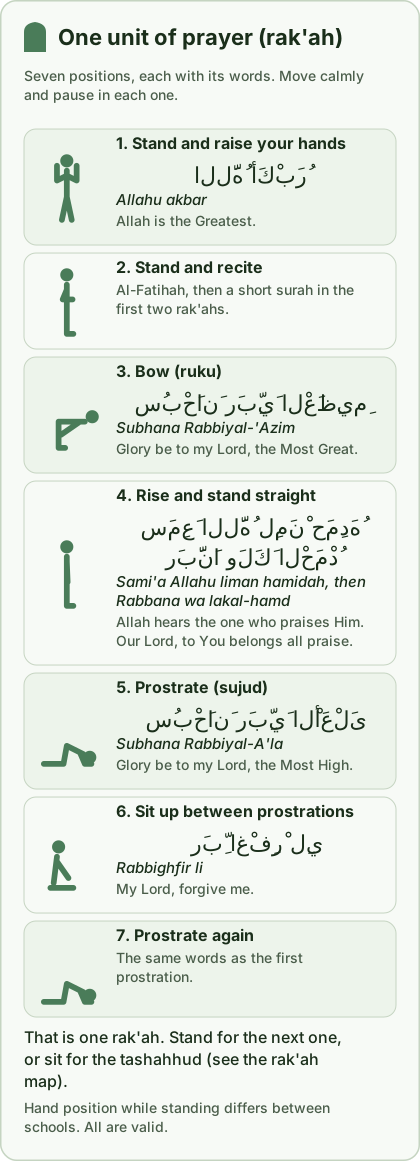
Levante as mãos e diga Allahu akbar. Isso abre a oração, e a partir daí você sai da conversa comum e entra na adoração.
Passo 3 - Em pé
Recite a Al-Fatihah e depois uma surata curta ou os poucos versículos que você está aprendendo. Se ainda não consegue recitar, a seção "Se você ainda não consegue recitar em árabe", abaixo, explica o que as escolas permitem enquanto isso.
Passo 4 - Ruku
Curve-se com as costas retas e firmes e diga a frase da curvatura. Levante-se dizendo Sami'a Allahu liman hamidah e, quando estiver de pé, diga Rabbana wa lakal-hamd. Faça uma pausa antes de descer. Não corra para acabar logo.
Passo 5 - Sujud
Desça para a prostração e diga a frase da prostração. Sente-se e diga Rabbighfir li, depois prostre-se uma segunda vez com a mesma frase. Deixe cada posição assentar antes de passar para a próxima.
Passo 6 - Segunda unidade
Fique em pé de novo e repita a mesma estrutura: Al-Fatihah, uma recitação curta, ruku, voltar a ficar em pé e depois duas prostrações.
Passo 7 - Tashahhud
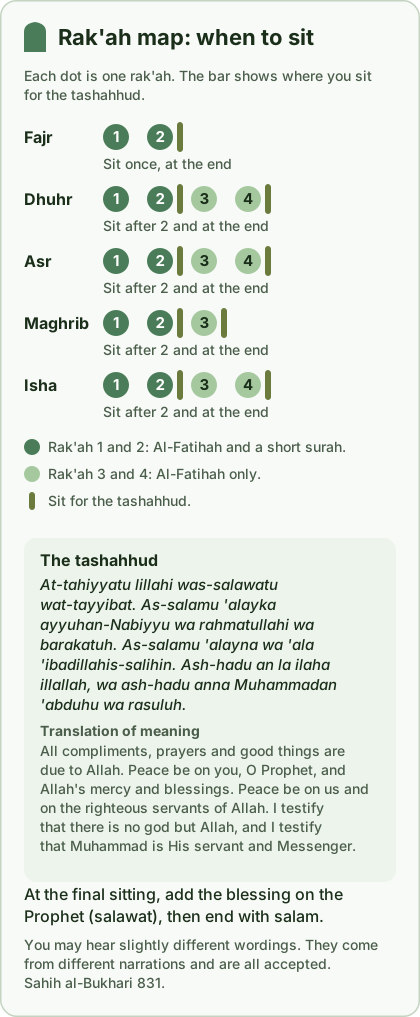
Depois da segunda rak'ah, sente-se e recite o tashahhud. Numa oração de duas rak'ahs, esta é a posição sentada final, então acrescente as bênçãos sobre o Profeta (salawat) antes do salam. Numa oração de três ou quatro rak'ahs, esta primeira posição sentada é mais curta, e depois você se levanta de novo. O mapa das rak'ahs abaixo mostra onde fica cada posição sentada.
Passo 8 - Taslim
Vire a cabeça para a direita e depois para a esquerda, dando a saudação de paz a cada vez. Isso encerra a oração. Fique sentado um instante antes de se levantar e voltar ao seu dia.
Ver os movimentos uma vez deixa o mapa acima mais fácil de seguir. Escolha uma oração na lista abaixo do vídeo se quiser só alguns minutos.
Ir para uma parte
O capítulo do Asr é curto porque o Asr é feito do mesmo jeito que o Dhuhr. O vídeo segue a prática de uma escola, e pequenas diferenças entre as escolas são normais. As legendas são geradas automaticamente.
Assistir no YouTube(abre em uma nova aba)
Nada é carregado do YouTube até você apertar o play. Depois disso, o vídeo toca no player de privacidade aprimorada do YouTube. Se o vídeo não tocar ou você estiver offline, use o link Assistir no YouTube. Mais detalhes na nossa política de privacidade.
Cada cartão traz o árabe, a transliteração e o significado. Quando o texto é do Alcorão, a tradução é uma tradução do sentido para ajudar você a entender, e o árabe é o Alcorão.
Início da oração
اللَّهُ أَكْبَرُ
Transliteração
Allahu akbar
Significado
Allah é o Maior.
Nota para iniciantes
Esta é a primeira frase a aprender. Diga-a com clareza e sem pressa. O sotaque vem com o tempo.
Em toda rak'ah
بِسْمِ اللَّهِ الرَّحْمَٰنِ الرَّحِيمِ الْحَمْدُ لِلَّهِ رَبِّ الْعَالَمِينَ الرَّحْمَٰنِ الرَّحِيمِ مَالِكِ يَوْمِ الدِّينِ إِيَّاكَ نَعْبُدُ وَإِيَّاكَ نَسْتَعِينُ اهْدِنَا الصِّرَاطَ الْمُسْتَقِيمَ صِرَاطَ الَّذِينَ أَنْعَمْتَ عَلَيْهِمْ غَيْرِ الْمَغْضُوبِ عَلَيْهِمْ وَلَا الضَّالِّينَ
Transliteração
Bismillahir-Rahmanir-Rahim. Alhamdu lillahi Rabbil-'alamin. Ar-Rahmanir-Rahim. Maliki yawmid-din. Iyyaka na'budu wa iyyaka nasta'in. Ihdinas-siratal-mustaqim. Siratal-ladhina an'amta 'alayhim ghayril-maghdubi 'alayhim wa lad-dallin.
Significado
Tradução do sentido: o louvor, a adoração e a ajuda pertencem a Allah, e pedimos a Ele que nos guie pelo caminho reto.
Nota para iniciantes
Al-Fatiha é a primeira meta real de memorização. Vá uma frase de cada vez e pergunte a um professor o que recitar enquanto ainda está aprendendo. Em congregação, quando o imã termina Al-Fatihah e diz Ameen (Ó Allah, atende), diga Ameen junto com ele. Se você tiver dúvidas sobre dizê-lo quando ora sozinho, pergunte a um professor.
Depois da Al-Fatihah, nas duas primeiras rak'ahs
قُلْ هُوَ اللَّهُ أَحَدٌ اللَّهُ الصَّمَدُ لَمْ يَلِدْ وَلَمْ يُولَدْ وَلَمْ يَكُن لَّهُ كُفُوًا أَحَدٌ
Transliteração
Qul huwa Allahu ahad. Allahus-samad. Lam yalid wa lam yulad. Wa lam yakun lahu kufuwan ahad.
Significado
Tradução do sentido: Allah é Único, autossuficiente, diferente da criação, e nada se compara a Ele.
Nota para iniciantes
A maioria dos iniciantes começa por aqui. É curta e afirma a unicidade de Allah em quatro linhas.
Depois da Al-Fatihah, nas duas primeiras rak'ahs
وَالْعَصْرِ إِنَّ الْإِنسَانَ لَفِي خُسْرٍ إِلَّا الَّذِينَ آمَنُوا وَعَمِلُوا الصَّالِحَاتِ وَتَوَاصَوْا بِالْحَقِّ وَتَوَاصَوْا بِالصَّبْرِ
Transliteração
Wal-'asr. Innal-insana lafi khusr. Illal-ladhina amanu wa 'amilus-salihat, wa tawasaw bil-haqqi wa tawasaw bis-sabr.
Significado
Tradução do sentido: as pessoas estão em perdição, exceto as que creem, fazem o bem e se incentivam à verdade e à paciência.
Nota para iniciantes
Trabalhe uma surata curta de cada vez. Ouvir primeiro um recitador confiável faz mais por você do que correr por vários capítulos.
Na curvatura
سُبْحَانَ رَبِّيَ الْعَظِيمِ
Transliteração
Subhana Rabbiyal-'Azim
Significado
Glorificado seja meu Senhor, o Magnífico.
Nota para iniciantes
A maioria dos guias ensina a dizer isto três vezes. Enquanto você aprende, uma repetição clara é um bom começo. Pergunte a um professor sobre os detalhes.
Saindo do ruku
سَمِعَ اللَّهُ لِمَنْ حَمِدَهُ رَبَّنَا وَلَكَ الْحَمْدُ
Transliteração
Sami'a Allahu liman hamidah. Rabbana wa lakal-hamd.
Significado
Allah ouve quem O louva. Nosso Senhor, a Ti pertence todo o louvor.
Nota para iniciantes
Diga a primeira linha enquanto se levanta e a segunda quando estiver de pé. Você também vai ouvir "Rabbana lakal-hamd", sem o "wa". As duas formas estão nos hadiths.
Na prostração
سُبْحَانَ رَبِّيَ الْأَعْلَى
Transliteração
Subhana Rabbiyal-A'la
Significado
Glorificado seja meu Senhor, o Altíssimo.
Nota para iniciantes
O sujud parece estranho nas primeiras vezes. Mova-se numa velocidade confortável para o seu corpo, faça uma pausa quando estiver embaixo e aprenda a frase. Ir devagar não é uma falha.
Entre o primeiro e o segundo sujud
رَبِّ اغْفِرْ لِي
Transliteração
Rabbighfir li
Significado
Meu Senhor, perdoa-me.
Nota para iniciantes
Duas palavras, e o Profeta as repetia. Diga uma ou duas vezes. Um professor pode mostrar uma versão mais longa depois, se você quiser.
Em toda posição sentada: depois da segunda rak'ah e no fim
التَّحِيَّاتُ لِلَّهِ وَالصَّلَوَاتُ وَالطَّيِّبَاتُ السَّلَامُ عَلَيْكَ أَيُّهَا النَّبِيُّ وَرَحْمَةُ اللَّهِ وَبَرَكَاتُهُ السَّلَامُ عَلَيْنَا وَعَلَى عِبَادِ اللَّهِ الصَّالِحِينَ أَشْهَدُ أَنْ لَا إِلَٰهَ إِلَّا اللَّهُ وَأَشْهَدُ أَنَّ مُحَمَّدًا عَبْدُهُ وَرَسُولُهُ
Transliteração
At-tahiyyatu lillahi was-salawatu wat-tayyibat. As-salamu 'alayka ayyuhan-Nabiyyu wa rahmatullahi wa barakatuh. As-salamu 'alayna wa 'ala 'ibadillahis-salihin. Ash-hadu an la ilaha illallah, wa ash-hadu anna Muhammadan 'abduhu wa rasuluh.
Significado
Todas as saudações, orações e coisas boas pertencem a Allah. A paz esteja contigo, ó Profeta, e a misericórdia e as bênçãos de Allah. A paz esteja conosco e com os servos justos de Allah. Testemunho que não há divindade além de Allah, e testemunho que Muhammad é Seu servo e Mensageiro.
Nota para iniciantes
Esta é a forma narrada por Ibn Mas'ud. Você pode ouvir formas um pouco diferentes de outras narrações autênticas, então siga o seu professor. Aprenda uma linha de cada vez.
Posição sentada final, depois do tashahhud
اللَّهُمَّ صَلِّ عَلَى مُحَمَّدٍ وَعَلَى آلِ مُحَمَّدٍ كَمَا صَلَّيْتَ عَلَى إِبْرَاهِيمَ وَعَلَى آلِ إِبْرَاهِيمَ إِنَّكَ حَمِيدٌ مَجِيدٌ اللَّهُمَّ بَارِكْ عَلَى مُحَمَّدٍ وَعَلَى آلِ مُحَمَّدٍ كَمَا بَارَكْتَ عَلَى إِبْرَاهِيمَ وَعَلَى آلِ إِبْرَاهِيمَ إِنَّكَ حَمِيدٌ مَجِيدٌ
Transliteração
Allahumma salli 'ala Muhammadin wa 'ala ali Muhammad, kama sallayta 'ala Ibrahima wa 'ala ali Ibrahim, innaka Hamidun Majid. Allahumma barik 'ala Muhammadin wa 'ala ali Muhammad, kama barakta 'ala Ibrahima wa 'ala ali Ibrahim, innaka Hamidun Majid.
Significado
Ó Allah, envia a Tua misericórdia sobre Muhammad e sobre a família de Muhammad, como enviaste a Tua misericórdia sobre Ibrahim e sobre a família de Ibrahim. Tu és Digno de louvor e Glorioso. Ó Allah, envia as Tuas bênçãos sobre Muhammad e sobre a família de Muhammad, como enviaste as Tuas bênçãos sobre Ibrahim e sobre a família de Ibrahim. Tu és Digno de louvor e Glorioso.
Nota para iniciantes
Diga-a na posição sentada final, depois do tashahhud e antes do salam. Se ela também é dita na primeira posição sentada de uma oração mais longa varia entre as escolas, então pergunte ao seu professor.
Fim da oração
السَّلَامُ عَلَيْكُمْ وَرَحْمَةُ اللَّهِ
Transliteração
As-salamu 'alaykum wa rahmatullah
Significado
A paz e a misericórdia de Allah estejam com vocês.
Nota para iniciantes
Isto encerra a oração. Vire a cabeça com suavidade para cada lado. Não é preciso fazer um movimento grande.
Toda oração termina com uma posição sentada. As orações de três ou quatro rak'ahs também têm uma posição sentada mais curta depois da segunda rak'ah.
Aulas curtas do Islamwise, um projeto para novos muçulmanos feito com a Green Lane Masjid. Cada uma diz uma frase devagar e explica o que ela significa.
Assistir no YouTube(abre em uma nova aba)
Nada é carregado do YouTube até você apertar o play. Depois disso, o vídeo toca no player de privacidade aprimorada do YouTube. Se o vídeo não tocar ou você estiver offline, use o link Assistir no YouTube. Mais detalhes na nossa política de privacidade.
Usar essas frases enquanto aprende é uma das opiniões entre as escolas. Veja a seção sobre orar antes de conseguir recitar.
Assistir no YouTube(abre em uma nova aba)
Nada é carregado do YouTube até você apertar o play. Depois disso, o vídeo toca no player de privacidade aprimorada do YouTube. Se o vídeo não tocar ou você estiver offline, use o link Assistir no YouTube. Mais detalhes na nossa política de privacidade.
29 aulas curtas, uma frase de cada vez, incluindo a Al-Fatihah versículo por versículo, o tashahhud e a salawat.
Abrir a série no YouTubeIsto é uma visão geral para iniciantes. Os detalhes variam entre as escolas de jurisprudência islâmica (madhhabs) e conforme a situação.
A vida real atrapalha a oração. Encontre a sua situação aqui e vá direto para a resposta.
Se você esquecer parte da oração, acrescentar algo por engano ou perder a conta das rak'ahs, existe um reparo simples: duas prostrações extras chamadas sujud al-sahw, a prostração do esquecimento. Para muitos erros, você não precisa recomeçar a oração.
Enquanto você ainda está começando, termine com calma e depois pergunte a um professor sobre o erro específico. Ninguém espera que você saiba todas as regras nos primeiros meses.
Entrar numa mesquita com a oração já em andamento acontece com todo mundo. O Profeta (que a paz esteja com ele) disse para chegar com calma, fazer o que alcançar e completar o que perdeu (Sahih al-Bukhari 636).
Peça a um imã da sua região que explique uma vez, na prática, como entrar atrasado. Leva cinco minutos e poupa muita preocupação.
Você pode orar em quase qualquer lugar limpo. Algumas coisinhas na bolsa facilitam no trabalho, na escola ou na estrada.
A oração fúnebre é feita de pé, atrás de um imã, sem inclinação e sem prostração. É curta, normalmente alguns minutos. Participar dela traz uma recompensa, e ficar para o enterro traz mais (Sahih al-Bukhari 1325).
Se alguém que você conhece faleceu, a mesquita local pode dizer quando e onde será a oração fúnebre.
Se dor, doença ou deficiência tornam difícil ficar em pé, se curvar ou se prostrar, ore do jeito que o seu corpo permite. O Profeta disse a um companheiro doente que orasse em pé; se não conseguisse, sentado; e se não conseguisse, deitado de lado.
Um imã ou professor da sua região pode ver você orar uma vez e ajudar a encontrar o que funciona para o seu corpo. Você nunca precisa forçar a dor para que a sua oração conte. No hospital, ore na cama como puder e pergunte às enfermeiras se o hospital tem uma equipe de assistência espiritual.
Ir para uma parte
Mostra como orar no chão, numa cadeira, em pé sem se curvar e deitado na cama.
Assistir no YouTube(abre em uma nova aba)
Nada é carregado do YouTube até você apertar o play. Depois disso, o vídeo toca no player de privacidade aprimorada do YouTube. Se o vídeo não tocar ou você estiver offline, use o link Assistir no YouTube. Mais detalhes na nossa política de privacidade.
Uma segunda demonstração curta, incluindo como orar numa cadeira na fileira de uma mesquita.
Termine a oração com calma e depois pergunte sobre aquele erro específico. O pânico costuma custar mais do que o erro.
A pronúncia vem com a repetição e nada mais. Allah sabe a diferença entre quem não está tentando e quem ainda está aprendendo.
Essas diferenças normalmente são todas válidas, e nenhuma delas é motivo para parar de orar. Aprenda um método confiável para iniciantes e pergunte a um professor antes de mudar de novo.
Desacelere até cada posição ficar claramente separada. Uma oração curta e calma ensina mais do que uma rápida e ansiosa.
Este é um companheiro para iniciantes. As referências foram conferidas. Decisões pessoais sobre a oração, detalhes de cada escola, adaptações para deficiência e situações incomuns ainda precisam da revisão de alguém qualificado.
Quran.com - Referência de texto e tradução do Alcorão
A fonte do texto em árabe da Al-Fatihah, usado na recitação da oração e na dua pedindo orientação. O texto em inglês é uma tradução do sentido.
Quran.com - Referência de texto e tradução do Alcorão
Usado como exemplo de surata curta na ferramenta Aprenda a orar. O texto em inglês é uma tradução do sentido.
Quran.com - Referência de texto e tradução do Alcorão
Usado como exemplo de surata curta na ferramenta Aprenda a orar. O texto em inglês é uma tradução do sentido.
Sunnah.com - Referência de hadith
Citado para o princípio de que a oração se aprende pela prática ensinada pelo Profeta, deixando os detalhes para iniciantes a professores qualificados.
New Muslim Guide - Guia de oração para iniciantes
Citado para uma orientação sobre a oração para iniciantes e a ordem da oração, deixando as decisões e as circunstâncias pessoais a professores qualificados.
Sunnah.com - Referência de dua e dhikr
A fonte da frase do ruku para iniciantes na ferramenta Aprenda a orar.
Sunnah.com - Referência de dua e dhikr
A fonte da frase do sujud para iniciantes na ferramenta Aprenda a orar.
Sunnah.com - Referência de hadith
A fonte da visão geral do tashahhud, com o lembrete de aprender as palavras completas com um professor qualificado ou numa gravação confiável.
Sunnah.com - Referência de hadith
A fonte do salam dito no fim da oração.
SeekersGuidance - Educação islâmica qualificada
Citada onde o guia para e diz para você perguntar a um estudioso qualificado sobre a sua situação.
Green Lane Masjid and Community Centre (Birmingham, UK) - Vídeo (YouTube)
Demonstra o Fajr, o Dhuhr, o Maghrib e o Isha completos; o capítulo do Asr tem 27 segundos e provavelmente remete ao Dhuhr. Marcações do autor: 1:11 antes de orar, 2:23 as cinco orações, 2:47 glossário e resumo das rak'ahs, 3:48 Fajr, 11:27 Dhuhr, 22:31 Asr, 22:58 Maghrib, 32:59 Isha. Só há legendas automáticas em inglês. Segue a prática de uma escola. Incorporado pelo player de privacidade aprimorada do YouTube (youtube-nocookie.com) e carregado só depois que você aperta o play. Licença padrão do YouTube; quem enviou permite a incorporação (conferido em 2026-09-23). Sem direito de download ou de reenvio.
Islamwise (new Muslim project with Green Lane Masjid) - Vídeo (YouTube)
Episódio 10: cada frase de uma rak'ah, do Allahu akbar ao salam, com a lembrança completa. Parcialmente verificado; usar frases de lembrança enquanto se aprende a Al-Fatihah é uma posição de fiqh que precisa de revisão. Incorporado pelo player de privacidade aprimorada do YouTube (youtube-nocookie.com) e carregado só depois que você aperta o play. Licença padrão do YouTube; quem enviou permite a incorporação (conferido em 2026-09-23). Sem direito de download ou de reenvio.
Islamwise (new Muslim project with Green Lane Masjid) - Vídeo (YouTube)
Episódio 3: cinco frases (SubhanAllah, Alhamdulillah, La ilaha illallah, Allahu akbar, La hawla wa la quwwata illa billah) para usar nas posições da oração até aprender a Al-Fatihah. Uma posição de fiqh; os detalhes variam conforme a escola. Incorporado pelo player de privacidade aprimorada do YouTube (youtube-nocookie.com) e carregado só depois que você aperta o play. Licença padrão do YouTube; quem enviou permite a incorporação (conferido em 2026-09-23). Sem direito de download ou de reenvio.
Islamwise (new Muslim project with Green Lane Masjid) - Vídeo (YouTube)
Aulas frase por frase sobre o que se diz na oração, a Al-Fatihah versículo por versículo (episódios 11 a 18), o tashahhud e a salawat. As descrições dos episódios apontam para uma playlist pessoal de um apresentador; use esta playlist do Islamwise. Parcialmente verificado. Só há link, sem incorporação. Licença padrão do YouTube; sem direito de download ou de reenvio.
Sunnah.com - Referência de hadith
Ao se levantar da curvatura, o Profeta dizia "Sami'a Allahu liman hamidah" e depois, de pé, "Rabbana wa lakal-hamd" (a narração também traz "Rabbana lakal-hamd"). Em Sahih al-Bukhari.
Sunnah.com - Referência de hadith
Entre as duas prostrações o Profeta dizia "Rabbighfir li, Rabbighfir li". Classificado sahih (Darussalam) no Sunnah.com.
Sunnah.com - Referência de hadith
Glorificado seja meu Senhor, o Magnífico, na curvatura, o Altíssimo, na prostração, e "Meu Senhor, perdoa-me" entre as prostrações. Classificado sahih (al-Albani) no Sunnah.com.
Sunnah.com - Referência de hadith
As palavras das bênçãos sobre o Profeta e a sua família, como sobre Ibrahim e a família dele. Em Sahih al-Bukhari.
Sunnah.com - Referência de hadith
O Profeta ensinou: diga o takbir, recite o que souber do Alcorão, curve-se até ficar tranquilo, fique em pé reto, prostre-se até ficar tranquilo, sente-se até ficar tranquilo. Em Sahih al-Bukhari.
Sunnah.com - Referência de hadith
A narração mais longa, que menciona a segunda prostração de cada rak'ah. Em Sahih al-Bukhari.
The Islamic Foundation of Ireland - Livreto para iniciantes
Imam Yahya M. Al-Hussein, prefácio datado de 1999. O número de rak'ahs e onde fica o tashahhud em cada oração (Fajr depois da 2ª; Dhuhr, Asr e Isha depois da 2ª e da 4ª; Maghrib depois da 2ª e da 3ª). A sua lista do que anula o wudu inclui tocar as partes íntimas e exclui sangramento e vômito, o que não é a opinião hanafi. Só link; nenhuma licença declarada.
Sunnah.com - Referência de hadith
A instrução do Profeta: se tiver dúvida sobre quantas rak'ahs fez, parta do que tem certeza e faça duas prostrações antes do salam. Em Sahih Muslim.
Sunnah.com - Referência de hadith
Depois de fazer cinco rak'ahs por engano, o Profeta fez duas prostrações depois do salam. Em Sahih al-Bukhari.
SeekersGuidance - Resposta de estudioso
Shaykh Dr. Bassem Itani, 26 de junho de 2024. O método hanafi da prostração do esquecimento e o que a exige. Só link (todos os direitos reservados).
NewMuslims.com - Aula
Imam Mufti, 2016. Quando se faz a prostração do esquecimento, os métodos antes e depois do salam e que quem ora atrás de um imã não faz a sua própria. Só link.
Sunnah.com - Referência de hadith
O Fajr dura até o sol começar a nascer; o Dhuhr, até chegar o Asr; o Asr, até o sol ficar amarelado; o Maghrib, até o crepúsculo sumir; o Isha, até passar a metade da noite. Em Sahih Muslim.
Quran.com - Referência do Alcorão
"A oração é um dever dos crentes nos horários definidos" (The Clear Quran, tradução do sentido).
NewMuslims.com - Aula
Uma tabela para iniciantes com as cinco orações, as suas unidades e as janelas de tempo, incluindo o Isha até a metade da noite (podendo ir até o amanhecer por necessidade). Ela coloca orar em árabe como condição, o que difere da permissão hanafi para quem ainda não consegue recitar. Só link.
Sunnah.com - Referência de hadith
O Profeta disse a Amr ibn al-As: "Você não sabe que o Islã apaga todos os erros anteriores?" Em Sahih Muslim.
SeekersGuidance - Resposta de estudioso
Ustadha Shaista Maqbool, revisado pelo Shaykh Faraz Rabbani, 4 de setembro de 2012. Um convertido num país não muçulmano não é responsável pelas orações do tempo antes de saber que a oração era obrigatória; as orações perdidas depois são repostas num ritmo administrável. Uma resposta em contexto hanafi; não trata diretamente das orações de antes do Islã. Só link.
Sunnah.com - Referência de hadith
O Profeta disse a Imran ibn Husain, que estava doente: ore em pé; se não conseguir, sentado; e se não conseguir, deitado de lado. Em Sahih al-Bukhari.
SeekersGuidance - Resposta de estudioso
Ustadh Tabraze Azam, 8 de fevereiro de 2013. Quando se pode deixar de ficar em pé (incapacidade, dor intensa ou tontura, medo de dano), orar no chão com prostrações de verdade se conseguir, senão com movimentos da cabeça, e usar uma cadeira se sentar no chão for difícil. Só link.
SeekersGuidance - Resposta de estudioso
Shaykh Dr. Muhammad Abu Bakr Badhib, 20 de junho de 2024. Doença passageira e de longo prazo, orar numa cadeira ou deitado voltado para a qibla, e inclinar a cabeça com a prostração mais baixa que a curvatura. Só link.
Green Lane Masjid and Community Centre (Birmingham, UK) - Vídeo (YouTube)
Orar sentado no chão, numa cadeira, em pé sem se curvar e deitado na cama, cada um demonstrado. Capítulos no YouTube: 1:06 sentado no chão, 2:51 numa cadeira, 3:35 sem conseguir se curvar, 4:39 deitado na cama. As escolas divergem nos detalhes sobre a cadeira. Incorporado pelo player de privacidade aprimorada do YouTube (youtube-nocookie.com) e carregado só depois que você aperta o play. Licença padrão do YouTube; quem enviou permite a incorporação (conferido em 2026-09-23). Sem direito de download ou de reenvio.
Sheikh Assim al-Hakeem (official channel) - Vídeo (YouTube)
Orar numa cadeira quando não se consegue ficar em pé, sozinho e na fileira de uma mesquita. Parcialmente verificado; as escolas divergem nos detalhes sobre a cadeira. Só há link, sem incorporação. Licença padrão do YouTube; sem direito de download ou de reenvio.
Sunnah.com - Referência de hadith
Um homem disse que não conseguia memorizar nada do Alcorão, e o Profeta ensinou a ele SubhanAllah, Alhamdulillah, La ilaha illallah, Allahu akbar, La hawla wa la quwwata illa billah. Classificado hasan (al-Albani) no Sunnah.com.
SeekersGuidance - Resposta de estudioso
Shaykh Yusuf Weltch, revisado pelo Shaykh Faraz Rabbani, 21 de abril de 2024. Hanafi: quem ainda não consegue recitar em árabe pode recitar uma tradução, ou dizer frases de lembrança em árabe, o que a resposta chama de mais cauteloso por ser válido nas escolas hanafi e shafi'i. Shafi'i: quem está aprendendo pode ler a Al-Fatihah de um mushaf na oração; uma tradução não é permitida. Maliki e hanbali: a recitação em outro idioma não é válida. Aprenda a Al-Fatihah aos poucos. Só link.
SeekersGuidance - Resposta de estudioso
Shaykh Faraz Rabbani, 18 de janeiro de 2012. Hanafi: segurar um Alcorão e ler dele na oração é fortemente desaconselhado; ser um novo muçulmano é uma justificativa válida enquanto se aprende a Al-Fatihah; aprenda um versículo curto, como Qul huwa Allahu ahad. Só link.
Dar al-Ifta al-Misriyyah - Resposta de estudioso
3 de março de 2015. Um novo muçulmano que ainda não consegue recitar a Al-Fatihah pode dizer lembranças de Allah no lugar, citando o relato de Abdullah ibn Abi Awfa e Ibn Qudamah (hanbali). Só link.
Sunnah.com - Referência de hadith
Quem tropeça ao recitar o Alcorão e acha isso difícil terá duas recompensas. Em Sahih Muslim.
Sunnah.com - Referência de hadith
Sahih al-Bukhari 636 (Abu Huraira), em Sahih al-Bukhari: ao ouvir a iqamah, vá para a oração com calma, ore o que alcançar com o imã e complete o que perdeu. A base do termo masbuq.
Sunnah.com - Referência de hadith
Sunan Abi Dawud 893 (Abu Hurairah): se você chegar enquanto o imã está em prostração, prostre-se com ele e não conte isso. O árabe acrescenta que quem alcança a curvatura alcançou a rak'ah. Classificado hasan por al-Albani.
Sunnah.com - Referência de hadith
Sahih al-Bukhari 780 (Abu Huraira), em Sahih al-Bukhari: diga Amin quando o imã o disser depois da Al-Fatihah. O texto trata de orar atrás de um imã; não cobre a oração sozinho nem o volume da voz.
Sunnah.com - Referência de hadith
Sahih al-Bukhari 725 (Anas): alinhem as fileiras; os companheiros ficavam ombro a ombro e pé com pé. Sahih.
Sunnah.com - Referência de hadith
Em Sahih al-Bukhari (sahih). Quem entra numa mesquita deve orar duas rak'ahs antes de se sentar. A página não traz as diferenças entre as escolas sobre o horário.
Sunnah.com - Referência de hadith
Em Sahih Muslim (sahih). Um homem entrou enquanto o Profeta fazia o sermão de sexta-feira e foi orientado a se levantar e orar duas rak'ahs. Os estudiosos divergem sobre aplicar isso durante o sermão.
Sunnah.com - Referência de hadith
Sunan an-Nasa'i 1425 (Abu Hurairah): quem alcança uma rak'ah da jumu'ah alcançou a jumu'ah. Classificado sahih pela Darussalam.
SeekersGuidance - Resposta de estudioso
Ustadh Tabraze Azam, revisado pelo Shaykh Faraz Rabbani, 15 de janeiro de 2017. Nada de orar ou falar depois que o imã sobe ao púlpito; a oração de sexta-feira é alcançada se a pessoa entrar antes do salam final, e ela completa duas rak'ahs.
SeekersGuidance - Resposta de estudioso
Shaykh Dr. Muhammad Fayez Awad, 26 de dezembro de 2024. A rak'ah é alcançada se a pessoa alcança o imã na curvatura (os estudiosos concordam); é recomendado esperar os dois salams antes de se levantar; o que se ora com o imã é a primeira parte da própria oração.
SeekersGuidance - Resposta de estudioso
Adaptado de Heavenly Ornaments, do Mawlana Ashraf Ali Thanawi, 22 de agosto de 2011. A oração de sexta-feira não é obrigatória para o doente, o viajante, a mulher, a criança ou o escravo; se um viajante ou uma mulher participar, o Dhuhr deixa de ser devido; quatro de suna antes e quatro depois; nenhuma oração depois que o imã se levanta para o sermão.
SeekersGuidance - Resposta de estudioso
Shaykha Mona ElZankaly e Saira AbuBakr, aprovado pelo Shaykh Rami Nsour, 26 de agosto de 2013. O witr é a única suna diária confirmada; duas antes do Fajr (raghiba); quatro antes e depois do Dhuhr, quatro antes do Asr, de duas a seis depois do Maghrib; nada fixo para a jumu'ah; nenhuma oração voluntária depois que o imã entrou para o sermão.
Quran.com - Referência do Alcorão
Usem os seus adornos em todo lugar de oração (Al-A'raf 7:31). Usado para se vestir adequadamente para a oração.
Sunnah.com - Referência de hadith
Sunan Abi Dawud 641 (Aisha): a oração de uma mulher que passou da puberdade não é aceita sem uma cobertura na cabeça. Classificado sahih por al-Albani.
Sunnah.com - Referência de hadith
Sunan Abi Dawud 650 (Abu Sa'id): o Profeta orou de sandálias e disse às pessoas que as conferissem para ver se havia sujeira e depois orassem com elas. Classificado sahih por al-Albani.
Sunnah.com - Referência de hadith
Sunan Abi Dawud 695, classificado sahih por al-Albani: quando você orar de frente para uma barreira (sutrah), fique perto dela.
Quran.com - Referência do Alcorão
Volte o rosto na direção de al-Masjid al-Haram onde quer que você esteja (Al-Baqarah 2:144). A base para se voltar para a qibla.
Sunnah.com - Referência de hadith
Jami at-Tirmidhi 344 (Abu Hurairah): o que está entre o leste e o oeste é qibla. Classificado sahih pela Darussalam. Dito em Medina; os estudiosos aplicam isso a quem não consegue ver a Caaba e se volta para a direção geral dela.
Sunnah.com - Referência de hadith
Sahih Muslim 560a (Aisha): não há oração quando a comida está servida, nem quando a pessoa está apertada para ir ao banheiro. Sahih.
Sunnah.com - Referência de hadith
Sahih al-Bukhari 1333 (Abu Hurairah): o Profeta conduziu a oração fúnebre por al-Najashi em fileiras e disse quatro takbirs. Sahih.
Sunnah.com - Referência de hadith
Sahih al-Bukhari 1325 (Abu Hurairah): um qirat de recompensa por participar da oração fúnebre, e dois por ficar até o sepultamento. Sahih.
IslamQA - Resposta de estudioso
Supervisionado pelo Shaykh Muhammad Salih al-Munajjid. Quatro takbirs: a Al-Fatihah depois do primeiro, as bênçãos sobre o Profeta depois do segundo, a dua pelo falecido depois do terceiro, e então o quarto e o salam. Segue uma abordagem; as outras escolas divergem nos detalhes.