Step 1 - Before the prayer
Prepare calmly
Make wudu, find a clean spot, face the qibla, and settle in your heart which prayer this is. You do not have to say the intention out loud.
Worship learning tool
Awaiting scholar review
A calm walk through a simple two-unit prayer, with the recitations a beginner needs and honest notes on when to go and ask someone.
Pray sincerely while you are still learning the words.
Get the shape of the prayer down before you chase every detail.
Ask a qualified imam about anything that turns on your own circumstances.
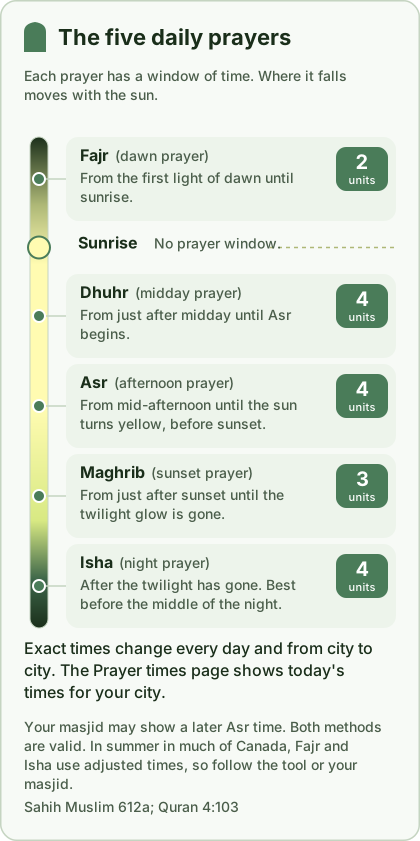
| Prayer | Time window | Rak'ahs |
|---|---|---|
| Dawn prayer (Fajr) | From the first light of dawn until sunrise. | 2 |
| Midday prayer (Dhuhr) | From just after midday, once the sun has passed its highest point, until Asr begins. | 4 |
| Afternoon prayer (Asr) | From mid-afternoon until sunset. Try not to leave it until the sun turns yellow. | 4 |
| Sunset prayer (Maghrib) | From just after sunset until the twilight has gone. | 3 |
| Night prayer (Isha) | From when the twilight has gone until the middle of the night. | 4 |
You can pray any time inside a window, so you do not need to be exact to the minute. Schools differ on when Asr begins (the Hanafi start is later) and on the latest time for Isha. In summer, much of Canada uses adjusted rules for Fajr and Isha, so use the prayer times page or your local masjid's timetable.
Prayers from the years before you became Muslim are not something you owe. The Prophet said that Islam wipes out what came before it, so you start from today. Some scholars add that a convert who did not yet know prayer was an obligation is not held to make up that time either. If you are unsure how this applies to you, ask a teacher.
This is a map, not a teacher. Use it to learn the order, then ask a local imam or teacher to watch you once and correct you.
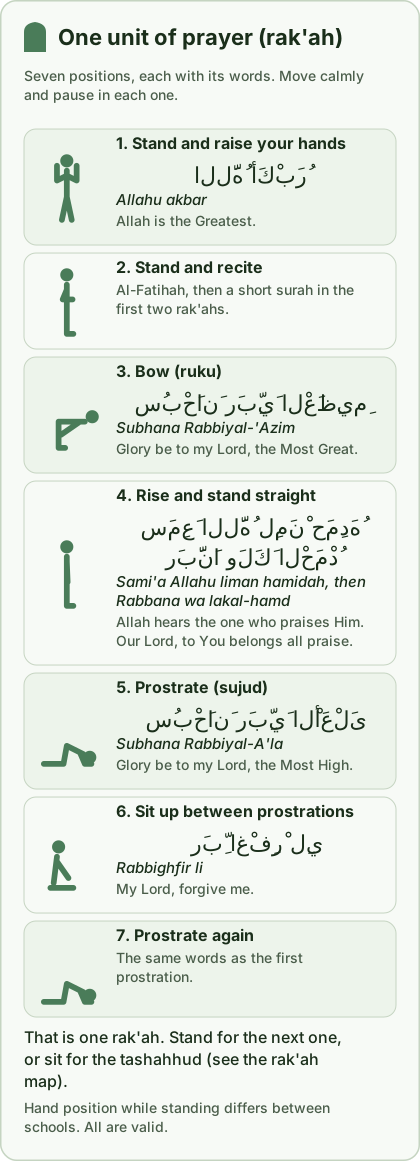
Step 1 - Before the prayer
Make wudu, find a clean spot, face the qibla, and settle in your heart which prayer this is. You do not have to say the intention out loud.
Step 2 - Opening takbir
Raise your hands and say Allahu akbar. That opens the prayer, and from that point you have stepped out of ordinary talk and into worship.
Step 3 - Standing
Recite Al-Fatihah, then a short surah or the few verses you are working on. If you cannot recite yet, the section 'If you cannot recite Arabic yet' below explains what the schools allow in the meantime.
Step 4 - Ruku
Bow with your back flat and steady and say the bowing phrase. Rise while saying Sami'a Allahu liman hamidah, and once you are standing straight say Rabbana wa lakal-hamd. Pause before you go down. Do not rush this to get it over with.
Step 5 - Sujud
Go down into prostration and say the prostration phrase. Sit up and say Rabbighfir li, then prostrate a second time with the same phrase. Let each position settle before you move on.
Step 6 - Second unit
Stand again and repeat the same shape: Al-Fatiha, a short recitation, ruku, standing back up, then two prostrations.
Step 7 - Tashahhud
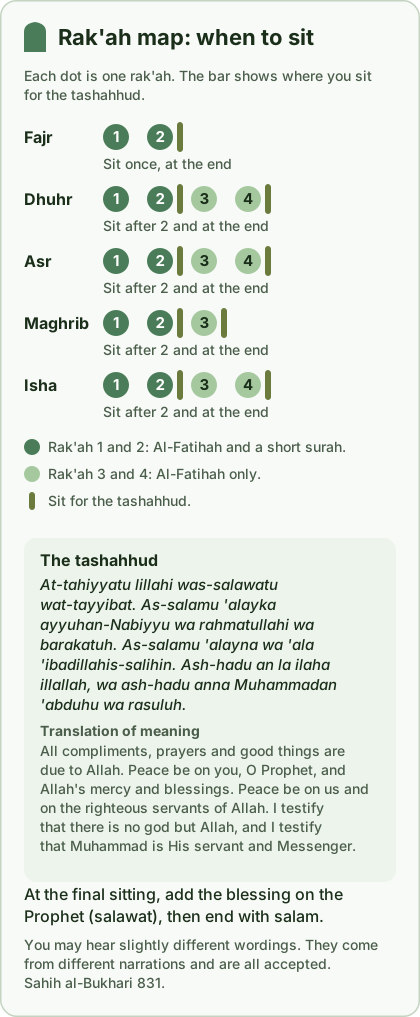
After the second rak'ah, sit and recite the tashahhud. In a two-rak'ah prayer this is the final sitting, so add the blessings on the Prophet (salawat) before the salam. In a three or four rak'ah prayer this first sitting is shorter, and you stand again afterwards. The rak'ah map below shows where each sitting falls.
Step 8 - Taslim
Turn your head to the right, then the left, giving the greeting of peace each time. That ends the prayer. Sit for a moment before you get up and rejoin your day.
Seeing the movements once makes the map above easier to follow. Pick one prayer from the list under the video if you only want a few minutes.
Jump to a part
The Asr chapter is short because Asr is prayed the same way as Dhuhr. The video follows one school's practice, and small differences between schools are normal. Captions are auto-generated.
Watch on YouTube(opens in a new tab)
Nothing loads from YouTube until you press play. After that, the video plays in YouTube's privacy-enhanced player. If the video will not play or you are offline, use the Watch on YouTube link. More in our privacy policy.
Each card gives the Arabic, a transliteration, and the meaning. Where the text is Quran, the English is a translation of meaning to help you understand it, and the Arabic is the Quran.
Start of prayer
اللَّهُ أَكْبَرُ
Transliteration
Allahu akbar
Meaning
Allah is the Greatest.
Beginner note
This is the first phrase to learn. Say it clearly and without hurrying. Your accent will come along on its own.
Every rak'ah
بِسْمِ اللَّهِ الرَّحْمَٰنِ الرَّحِيمِ الْحَمْدُ لِلَّهِ رَبِّ الْعَالَمِينَ الرَّحْمَٰنِ الرَّحِيمِ مَالِكِ يَوْمِ الدِّينِ إِيَّاكَ نَعْبُدُ وَإِيَّاكَ نَسْتَعِينُ اهْدِنَا الصِّرَاطَ الْمُسْتَقِيمَ صِرَاطَ الَّذِينَ أَنْعَمْتَ عَلَيْهِمْ غَيْرِ الْمَغْضُوبِ عَلَيْهِمْ وَلَا الضَّالِّينَ
Transliteration
Bismillahir-Rahmanir-Rahim. Alhamdu lillahi Rabbil-'alamin. Ar-Rahmanir-Rahim. Maliki yawmid-din. Iyyaka na'budu wa iyyaka nasta'in. Ihdinas-siratal-mustaqim. Siratal-ladhina an'amta 'alayhim ghayril-maghdubi 'alayhim wa lad-dallin.
Meaning
Translation of meaning: praise, worship, and help belong to Allah, and we ask Him to guide us to the straight path.
Beginner note
Al-Fatiha is the first real memorization goal. Take one phrase at a time, and ask a teacher what to recite while you are still learning it. In congregation, when the imam finishes Al-Fatihah and says Ameen (O Allah, answer), say Ameen with him. If you have questions about saying it when you pray alone, ask a teacher.
After Al-Fatiha in the first two rak'ahs
قُلْ هُوَ اللَّهُ أَحَدٌ اللَّهُ الصَّمَدُ لَمْ يَلِدْ وَلَمْ يُولَدْ وَلَمْ يَكُن لَّهُ كُفُوًا أَحَدٌ
Transliteration
Qul huwa Allahu ahad. Allahus-samad. Lam yalid wa lam yulad. Wa lam yakun lahu kufuwan ahad.
Meaning
Translation of meaning: Allah is One, self-sufficient, unlike creation, and nothing is comparable to Him.
Beginner note
Most beginners start here. It is short, and it states the oneness of Allah in four lines.
After Al-Fatiha in the first two rak'ahs
وَالْعَصْرِ إِنَّ الْإِنسَانَ لَفِي خُسْرٍ إِلَّا الَّذِينَ آمَنُوا وَعَمِلُوا الصَّالِحَاتِ وَتَوَاصَوْا بِالْحَقِّ وَتَوَاصَوْا بِالصَّبْرِ
Transliteration
Wal-'asr. Innal-insana lafi khusr. Illal-ladhina amanu wa 'amilus-salihat, wa tawasaw bil-haqqi wa tawasaw bis-sabr.
Meaning
Translation of meaning: people are in loss except those who believe, do good, and encourage truth and patience.
Beginner note
Work on one short surah at a time. Listening to a reliable reciter first does more for you than racing through several chapters.
While bowing
سُبْحَانَ رَبِّيَ الْعَظِيمِ
Transliteration
Subhana Rabbiyal-'Azim
Meaning
Glory be to my Lord, the Most Great.
Beginner note
Most guides teach saying this three times. While you are learning, one clear repetition is a fine place to start. Ask a teacher about the details.
Coming up from ruku
سَمِعَ اللَّهُ لِمَنْ حَمِدَهُ رَبَّنَا وَلَكَ الْحَمْدُ
Transliteration
Sami'a Allahu liman hamidah. Rabbana wa lakal-hamd.
Meaning
Allah hears the one who praises Him. Our Lord, and to You belongs all praise.
Beginner note
Say the first line as you come up and the second once you are standing straight. You will also hear 'Rabbana lakal-hamd' without the 'wa'. Both wordings are in the hadith.
While prostrating
سُبْحَانَ رَبِّيَ الْأَعْلَى
Transliteration
Subhana Rabbiyal-A'la
Meaning
Glory be to my Lord, the Most High.
Beginner note
Sujud feels strange the first few times. Move at a speed your body is happy with, pause once you are down, and learn the phrase. Slow is not a failing.
Between the first and second sujud
رَبِّ اغْفِرْ لِي
Transliteration
Rabbighfir li
Meaning
My Lord, forgive me.
Beginner note
Two words, and the Prophet repeated them. Say it once or twice. A teacher can show you a longer version later if you want it.
Every sitting: after the second rak'ah and at the end
التَّحِيَّاتُ لِلَّهِ وَالصَّلَوَاتُ وَالطَّيِّبَاتُ السَّلَامُ عَلَيْكَ أَيُّهَا النَّبِيُّ وَرَحْمَةُ اللَّهِ وَبَرَكَاتُهُ السَّلَامُ عَلَيْنَا وَعَلَى عِبَادِ اللَّهِ الصَّالِحِينَ أَشْهَدُ أَنْ لَا إِلَٰهَ إِلَّا اللَّهُ وَأَشْهَدُ أَنَّ مُحَمَّدًا عَبْدُهُ وَرَسُولُهُ
Transliteration
At-tahiyyatu lillahi was-salawatu wat-tayyibat. As-salamu 'alayka ayyuhan-Nabiyyu wa rahmatullahi wa barakatuh. As-salamu 'alayna wa 'ala 'ibadillahis-salihin. Ash-hadu an la ilaha illallah, wa ash-hadu anna Muhammadan 'abduhu wa rasuluh.
Meaning
All compliments, prayers and good things are for Allah. Peace be on you, O Prophet, and Allah's mercy and blessings. Peace be on us and on the righteous servants of Allah. I testify that there is no god but Allah, and I testify that Muhammad is His servant and Messenger.
Beginner note
This is the wording narrated by Ibn Mas'ud. You may hear slightly different wordings from other authentic narrations, so follow your teacher. Learn it one line at a time.
Final sitting, after the tashahhud
اللَّهُمَّ صَلِّ عَلَى مُحَمَّدٍ وَعَلَى آلِ مُحَمَّدٍ كَمَا صَلَّيْتَ عَلَى إِبْرَاهِيمَ وَعَلَى آلِ إِبْرَاهِيمَ إِنَّكَ حَمِيدٌ مَجِيدٌ اللَّهُمَّ بَارِكْ عَلَى مُحَمَّدٍ وَعَلَى آلِ مُحَمَّدٍ كَمَا بَارَكْتَ عَلَى إِبْرَاهِيمَ وَعَلَى آلِ إِبْرَاهِيمَ إِنَّكَ حَمِيدٌ مَجِيدٌ
Transliteration
Allahumma salli 'ala Muhammadin wa 'ala ali Muhammad, kama sallayta 'ala Ibrahima wa 'ala ali Ibrahim, innaka Hamidun Majid. Allahumma barik 'ala Muhammadin wa 'ala ali Muhammad, kama barakta 'ala Ibrahima wa 'ala ali Ibrahim, innaka Hamidun Majid.
Meaning
O Allah, send Your mercy on Muhammad and on the family of Muhammad, as You sent Your mercy on Ibrahim and on the family of Ibrahim. You are Praiseworthy and Glorious. O Allah, send Your blessings on Muhammad and on the family of Muhammad, as You sent Your blessings on Ibrahim and on the family of Ibrahim. You are Praiseworthy and Glorious.
Beginner note
Say it in the final sitting, after the tashahhud and before the salam. Whether it is also said in the first sitting of a longer prayer differs between schools, so ask your teacher.
End of prayer
السَّلَامُ عَلَيْكُمْ وَرَحْمَةُ اللَّهِ
Transliteration
As-salamu 'alaykum wa rahmatullah
Meaning
Peace and Allah's mercy be upon you.
Beginner note
This closes the prayer. Turn your head gently each way. There is no need to make a large movement of it.
Every prayer ends with a sitting. Prayers with three or four rak'ahs also have a shorter sitting after the second rak'ah.
Short lessons from Islamwise, a new Muslim project run with Green Lane Masjid. Each one says a phrase slowly and explains what it means.
Watch on YouTube(opens in a new tab)
Nothing loads from YouTube until you press play. After that, the video plays in YouTube's privacy-enhanced player. If the video will not play or you are offline, use the Watch on YouTube link. More in our privacy policy.
Using these phrases while you learn is one view among the schools. See the section on praying before you can recite.
Watch on YouTube(opens in a new tab)
Nothing loads from YouTube until you press play. After that, the video plays in YouTube's privacy-enhanced player. If the video will not play or you are offline, use the Watch on YouTube link. More in our privacy policy.
29 short lessons, one phrase at a time, including Al-Fatihah verse by verse, the tashahhud and the salawat.
Open the series on YouTubeThis is an overview for beginners. The details differ between schools of law and by circumstance.
Real life gets in the way of prayer. Find your situation here and go straight to the answer.
If you forget part of the prayer, add something by mistake, or lose count of your rak'ahs, there is a simple repair: two extra prostrations called sujud al-sahw, the prostration of forgetfulness. For many mistakes you do not need to start the prayer again.
While you are new, finish calmly and ask a teacher about the specific mistake afterwards. Nobody expects you to know every rule in your first months.
Walking into a masjid while the prayer is already under way happens to everyone. The Prophet (peace be upon him) said to come calmly, pray what you catch and complete what you missed (Sahih al-Bukhari 636).
Ask a local imam to walk you through joining late once. It takes five minutes and saves a lot of worry.
You can pray almost anywhere that is clean. A few small things in your bag make it easier at work, at school or on the road.
The funeral prayer is prayed standing, behind an imam, with no bowing and no prostration. It is short, usually a few minutes. Attending it carries a reward, and staying for the burial carries more (Sahih al-Bukhari 1325).
If someone you know has died, the local masjid can tell you when the funeral prayer is and where.
If pain, illness or disability makes standing, bowing or prostrating hard, pray in the way your body allows. The Prophet told a companion who was ill to pray standing, and if he could not, sitting, and if he could not, lying on his side.
A local imam or teacher can watch you pray once and help you settle on what works for your body. You never need to push through pain to make your prayer count. In hospital, pray in bed as you are able, and ask the nurses whether the hospital has a spiritual care team.
Jump to a part
Shows praying on the floor, on a chair, standing without bowing, and lying in bed.
Watch on YouTube(opens in a new tab)
Nothing loads from YouTube until you press play. After that, the video plays in YouTube's privacy-enhanced player. If the video will not play or you are offline, use the Watch on YouTube link. More in our privacy policy.
A short second demonstration, including praying on a chair in a masjid row.
Finish the prayer calmly, then ask about that specific mistake afterwards. The panic usually costs you more than the mistake did.
Pronunciation comes with repetition and nothing else. Allah knows the difference between someone who is not trying and someone who is still learning.
Those differences are usually all valid, and none of them are a reason to stop praying. Learn one reliable beginner method, and ask a teacher before you switch again.
Slow down until each posture is clearly its own. A short calm prayer teaches you more than a fast anxious one.
This is a beginner companion. The references have been checked. Personal prayer rulings, school-specific details, disability accommodations, and unusual situations still need review by someone qualified.
Quran.com - Quran text and translation reference
The source for the Al-Fatiha Arabic text, used in prayer recitation and in the dua for guidance. The English wording is a translation of the meaning.
Quran.com - Quran text and translation reference
Used as a short-surah example in the Salah Companion. The English wording is a translation of the meaning.
Quran.com - Quran text and translation reference
Used as a short-surah example in the Salah Companion. The English wording is a translation of the meaning.
Sunnah.com - Hadith reference
Cited for the principle that prayer is learned from the Prophet's taught practice, with the beginner details left to qualified teachers.
New Muslim Guide - Prayer beginner guide
Cited for beginner prayer orientation and the order of the prayer, with rulings and personal circumstances left to qualified teachers.
Sunnah.com - Dua and dhikr reference
The source for the beginner ruku phrase in the Salah Companion.
Sunnah.com - Dua and dhikr reference
The source for the beginner sujud phrase in the Salah Companion.
Sunnah.com - Hadith reference
The source for the tashahhud overview, with the reminder to learn the full wording from a qualified teacher or a reliable recording.
Sunnah.com - Hadith reference
The source for the salam said at the end of prayer.
SeekersGuidance - Qualified Islamic education
Cited where the guide stops short and tells you to ask a qualified scholar about your own situation.
Green Lane Masjid and Community Centre (Birmingham, UK) - Video (YouTube)
Demonstrates Fajr, Dhuhr, Maghrib and Isha in full; the Asr chapter is 27 seconds and likely refers back to Dhuhr. Creator timestamps: 1:11 before you pray, 2:23 the five prayers, 2:47 glossary and rak'ah overview, 3:48 Fajr, 11:27 Dhuhr, 22:31 Asr, 22:58 Maghrib, 32:59 Isha. Only auto-generated English captions. Follows one school's practice. Embedded through YouTube's privacy-enhanced player (youtube-nocookie.com) and loaded only after you press play. YouTube Standard Licence; the uploader allows embedding (checked 2026-09-23). No download or re-upload rights.
Islamwise (new Muslim project with Green Lane Masjid) - Video (YouTube)
Episode 10: every phrase of one rak'ah, from Allahu akbar to salam, with the comprehensive remembrance. Partially verified; using remembrance phrases while learning Al-Fatihah is a fiqh position that needs review. Embedded through YouTube's privacy-enhanced player (youtube-nocookie.com) and loaded only after you press play. YouTube Standard Licence; the uploader allows embedding (checked 2026-09-23). No download or re-upload rights.
Islamwise (new Muslim project with Green Lane Masjid) - Video (YouTube)
Episode 3: five phrases (SubhanAllah, Alhamdulillah, La ilaha illallah, Allahu akbar, La hawla wa la quwwata illa billah) to use in the positions of prayer until Al-Fatihah is learned. A fiqh position; details vary by school. Embedded through YouTube's privacy-enhanced player (youtube-nocookie.com) and loaded only after you press play. YouTube Standard Licence; the uploader allows embedding (checked 2026-09-23). No download or re-upload rights.
Islamwise (new Muslim project with Green Lane Masjid) - Video (YouTube)
Phrase-by-phrase lessons on what is said in prayer, Al-Fatihah verse by verse (episodes 11 to 18), the tashahhud and salawat. Episode descriptions link to a presenter's personal playlist; use this Islamwise playlist. Partially verified. Linked only, not embedded. YouTube Standard Licence; no download or re-upload rights.
Sunnah.com - Hadith reference
On rising from bowing the Prophet said 'Sami'a Allahu liman hamidah', then while standing 'Rabbana wa lakal-hamd' (the narration also gives 'Rabbana lakal-hamd'). In Sahih al-Bukhari.
Sunnah.com - Hadith reference
Between the two prostrations the Prophet said 'Rabbighfir li, Rabbighfir li'. Graded Sahih (Darussalam) on Sunnah.com.
Sunnah.com - Hadith reference
Glory to my Lord the Most Great in bowing, the Most High in prostration, and 'My Lord, forgive me' between the prostrations. Graded Sahih (al-Albani) on Sunnah.com.
Sunnah.com - Hadith reference
The wording of the blessings on the Prophet and his family, as on Ibrahim and his family. In Sahih al-Bukhari.
Sunnah.com - Hadith reference
The Prophet taught: say takbir, recite what you know of the Quran, bow until at ease, stand straight, prostrate until at ease, sit until at ease. In Sahih al-Bukhari.
Sunnah.com - Hadith reference
The longer narration, which names the second prostration of each rak'ah. In Sahih al-Bukhari.
The Islamic Foundation of Ireland - Beginner booklet
Imam Yahya M. Al-Hussein, preface dated 1999. Rak'ah counts and where the tashahhud comes in each prayer (Fajr after the 2nd; Dhuhr, Asr and Isha after the 2nd and 4th; Maghrib after the 2nd and 3rd). Its list of what breaks wudu includes touching the private parts and excludes bleeding and vomiting, which is not the Hanafi view. Link only; no licence stated.
Sunnah.com - Hadith reference
The Prophet's instruction: if in doubt about how many rak'ahs were prayed, build on what you are sure of and make two prostrations before the salam. In Sahih Muslim.
Sunnah.com - Hadith reference
After praying five rak'ahs by mistake, the Prophet made two prostrations after the salam. In Sahih al-Bukhari.
SeekersGuidance - Scholarly answer
Shaykh Dr. Bassem Itani, 26 June 2024. The Hanafi method of the prostration of forgetfulness and what calls for it. Link only (all rights reserved).
NewMuslims.com - Lesson
Imam Mufti, 2016. When the prostration of forgetfulness is made, the before-salam and after-salam methods, and that a person praying behind an imam does not make their own. Link only.
Sunnah.com - Hadith reference
Fajr lasts until the sun begins to rise; Dhuhr until Asr comes; Asr until the sun turns yellow; Maghrib until the twilight has gone; Isha until half the night has passed. In Sahih Muslim.
Quran.com - Quran reference
'Performing prayers is a duty on the believers at the appointed times' (The Clear Quran, translation of meaning).
NewMuslims.com - Lesson
A beginner table of the five prayers with their units and time windows, including Isha until the middle of the night (extendable to dawn by necessity). It lists praying in Arabic as a condition, which differs from the Hanafi allowance for someone who cannot yet recite. Link only.
Sunnah.com - Hadith reference
The Prophet said to Amr ibn al-As: 'Are you not aware that Islam wipes out all the previous misdeeds?' In Sahih Muslim.
SeekersGuidance - Scholarly answer
Ustadha Shaista Maqbool, checked by Shaykh Faraz Rabbani, 4 September 2012. A convert in a non-Muslim country is not responsible for prayers from the time before they knew prayer was obligatory; later missed prayers are made up on a manageable schedule. A Hanafi-context answer; it does not speak directly about prayers from before Islam. Link only.
Sunnah.com - Hadith reference
The Prophet told Imran ibn Husain, who was ill: pray standing, and if you cannot, sitting, and if you cannot, lying on your side. In Sahih al-Bukhari.
SeekersGuidance - Scholarly answer
Ustadh Tabraze Azam, 8 February 2013. When standing may be left (inability, intense pain or dizziness, fear of harm), praying on the floor with real prostrations if able, otherwise with head movements, and using a chair if floor sitting is hard. Link only.
SeekersGuidance - Scholarly answer
Shaykh Dr. Muhammad Abu Bakr Badhib, 20 June 2024. Temporary and long-term illness, praying on a chair or lying down facing the qibla, and nodding with the prostration lower than the bowing. Link only.
Green Lane Masjid and Community Centre (Birmingham, UK) - Video (YouTube)
Praying sitting on the ground, on a chair, standing without bowing and lying in bed, each demonstrated. YouTube chapters: 1:06 sitting on the ground, 2:51 on a chair, 3:35 unable to bow, 4:39 lying in bed. Schools differ on chair details. Embedded through YouTube's privacy-enhanced player (youtube-nocookie.com) and loaded only after you press play. YouTube Standard Licence; the uploader allows embedding (checked 2026-09-23). No download or re-upload rights.
Sheikh Assim al-Hakeem (official channel) - Video (YouTube)
Praying on a chair when unable to stand, alone and in a masjid row. Partially verified; schools differ on chair details. Linked only, not embedded. YouTube Standard Licence; no download or re-upload rights.
Sunnah.com - Hadith reference
A man said he could not memorise anything of the Quran and the Prophet taught him SubhanAllah, Alhamdulillah, La ilaha illallah, Allahu akbar, La hawla wa la quwwata illa billah. Graded Hasan (al-Albani) on Sunnah.com.
SeekersGuidance - Scholarly answer
Shaykh Yusuf Weltch, checked by Shaykh Faraz Rabbani, 21 April 2024. Hanafi: someone who cannot yet recite Arabic may recite a translation, or say Arabic remembrance phrases instead, which it calls more cautious because that is valid in both the Hanafi and Shafi'i schools. Shafi'i: a learner may read Al-Fatihah from a mushaf in prayer; a translation is not allowed. Maliki and Hanbali: recitation in another language is not valid. Learn Al-Fatihah gradually. Link only.
SeekersGuidance - Scholarly answer
Shaykh Faraz Rabbani, 18 January 2012. Hanafi: holding a Quran and reading from it in prayer is strongly disliked; being a new Muslim is a valid excuse while learning Al-Fatihah; learn a short verse such as Qul huwa Allahu ahad. Link only.
Dar al-Ifta al-Misriyyah - Scholarly answer
3 March 2015. A new Muslim who cannot yet recite Al-Fatihah may say remembrance of Allah instead, citing the report of Abdullah ibn Abi Awfa and Ibn Qudamah (Hanbali). Link only.
Sunnah.com - Hadith reference
The one who falters in reciting the Quran and finds it difficult will have two rewards. In Sahih Muslim.
Sunnah.com - Hadith reference
Sahih al-Bukhari 636 (Abu Huraira), in Sahih al-Bukhari: on hearing the iqamah, walk to the prayer calmly, pray what you catch with the imam and complete what you missed. The basis of the term masbuq.
Sunnah.com - Hadith reference
Sunan Abi Dawud 893 (Abu Hurairah): if you come while the imam is prostrating, prostrate with him and do not count it. The Arabic adds that whoever catches the bowing has caught the rak'ah. Graded Hasan by al-Albani.
Sunnah.com - Hadith reference
Sahih al-Bukhari 780 (Abu Huraira), in Sahih al-Bukhari: say Ameen when the imam says it after Al-Fatihah. The text is about praying behind an imam; it does not cover praying alone or how loudly to say it.
Sunnah.com - Hadith reference
Sahih al-Bukhari 725 (Anas): straighten the rows; the companions stood shoulder to shoulder and foot to foot. Sahih.
Sunnah.com - Hadith reference
In Sahih al-Bukhari (sahih). Whoever enters a masjid should pray two rak'ahs before sitting. The page does not give school differences on timing.
Sunnah.com - Hadith reference
In Sahih Muslim (sahih). A man came in while the Prophet was giving the Friday sermon and was told to stand and pray two rak'ahs. Scholars differ on applying this during the sermon.
Sunnah.com - Hadith reference
Sunan an-Nasa'i 1425 (Abu Hurairah): whoever catches a rak'ah of Jumu'ah has caught it. Graded Sahih by Darussalam.
SeekersGuidance - Scholar answer
Ustadh Tabraze Azam, checked by Shaykh Faraz Rabbani, 15 January 2017. No praying or speaking once the imam ascends the pulpit; Friday prayer is caught if one joins before the final salam, and two rak'ahs are made up.
SeekersGuidance - Scholar answer
Shaykh Dr. Muhammad Fayez Awad, 26 December 2024. The rak'ah is caught if the imam is caught in bowing (the scholars agree); recommended to wait for both salams before standing; what is prayed with the imam is the first part of one's own prayer.
SeekersGuidance - Scholar answer
Edited from Heavenly Ornaments by Mawlana Ashraf Ali Thanawi, 22 August 2011. Friday prayer is not obligatory on the sick, the traveller, a woman, a child or a slave; if a traveller or woman attends, Dhuhr is no longer due; four sunnah before and four after; no prayer once the imam stands for the sermon.
SeekersGuidance - Scholar answer
Shaykha Mona ElZankaly and Saira AbuBakr, approved by Shaykh Rami Nsour, 26 August 2013. Witr is the one confirmed daily sunnah; two before Fajr (raghiba); four before and after Dhuhr, four before Asr, two to six after Maghrib; nothing set for Jumu'ah; no voluntary prayer once the imam has entered for the sermon.
Quran.com - Quran reference
Take your adornment at every place of prayer (Al-A'raf 7:31). Used for dressing properly for prayer.
Sunnah.com - Hadith reference
Sunan Abi Dawud 641 (Aisha): the prayer of a woman past puberty is not accepted without a head covering. Graded Sahih by al-Albani.
Sunnah.com - Hadith reference
Sunan Abi Dawud 650 (Abu Sa'id): the Prophet prayed in his sandals and told people to check them for dirt and then pray in them. Graded Sahih by al-Albani.
Sunnah.com - Hadith reference
Sunan Abi Dawud 695, graded Sahih by al-Albani: when you pray facing a barrier (sutrah), keep close to it.
Quran.com - Quran reference
Turn your face towards al-Masjid al-Haram wherever you are (Al-Baqarah 2:144). The basis for facing the qibla.
Sunnah.com - Hadith reference
Jami at-Tirmidhi 344 (Abu Hurairah): what is between the east and the west is qibla. Graded Sahih by Darussalam. Said in Madinah; scholars apply it to someone who cannot see the Ka'bah facing its general direction.
Sunnah.com - Hadith reference
Sahih Muslim 560a (Aisha): no prayer when food is served, or when one is pressed by the call of nature. Sahih.
Sunnah.com - Hadith reference
Sahih al-Bukhari 1333 (Abu Hurairah): the Prophet led the funeral prayer for al-Najashi in rows and said four takbirs. Sahih.
Sunnah.com - Hadith reference
Sahih al-Bukhari 1325 (Abu Hurairah): one qirat of reward for attending the funeral prayer, and two for staying until the burial. Sahih.
IslamQA - Scholar answer
Supervised by Shaykh Muhammad Salih al-Munajjid. Four takbirs: Al-Fatihah after the first, blessings on the Prophet after the second, dua for the deceased after the third, then the fourth and salam. Follows one approach; other schools differ in details.