
Before Ramadan starts
- Ask your masjid how they announce the start of Ramadan.
- Check the prayer and iftar times for where you live.
- Plan a simple suhoor you can actually wake up for.
- Tell work, school, or family only what they need to know.
Ramadan is the ninth month of the Islamic calendar and the month Muslims fast. From dawn until sunset you take no food, no drink, and no sexual intercourse. The fasting is the visible part, but the month is also about prayer, reading Quran, giving, and paying closer attention to how you treat people. The first revelation of the Quran came during Ramadan, which is part of why the month carries the weight it does.
You are not alone
If this is your first Ramadan, feeling anxious or unsure about it is normal. Whatever fasting you manage counts, and you can build up from there. Go easy on yourself. Muslims who have fasted their whole lives still find some days hard.
Find a fasting buddy, a mentor, or a community group so you are not doing the month alone. Many mosques run programs specifically for new Muslims during Ramadan, and most people are glad to be asked.
Became Muslim during Ramadan? What you owe and what you do not
For the detailed rules, see Fasting and Ramadan in the topics section.
Use these short checklists as a starting point. Ramadan runs a whole month, so there is no need to do everything in the first week.
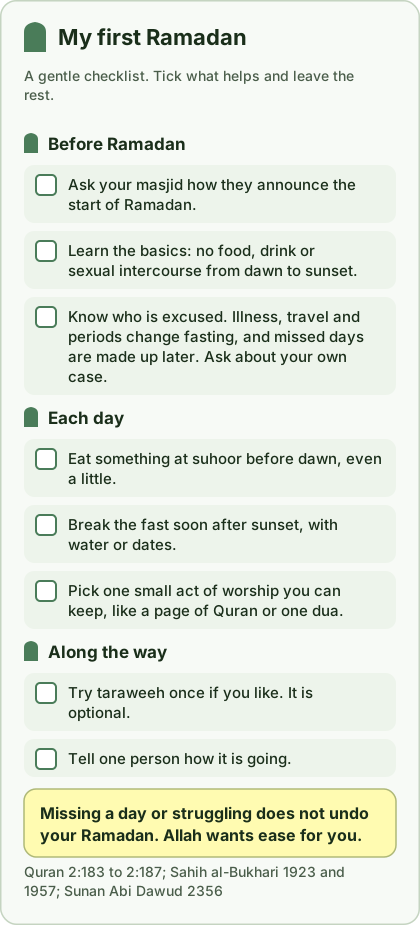
These notes are here to get you oriented. Your own fasting case needs qualified religious review, and anything touching your health needs medical advice as well.
If illness, travel, menstruation, or another valid reason kept you from fasting, do not guess your way out of it from a short post. Quran 2:184-185 sets the broad rule about making days up for sickness and travel. The specifics of qada, fidyah, pregnancy, nursing, chronic illness, and years that have piled up need someone qualified to look at them.
Plenty of things change whether a person fasts. Menstruation, serious illness, travel, medication, pregnancy, nursing, disability, and long-term health conditions are nothing to be embarrassed about. They are personal cases, and they deserve careful guidance from someone who knows the material.
Your first Eid may feel happy, lonely, or both at once. A small Eid still counts as Eid. Make one concrete plan before Ramadan ends so the day does not arrive with nothing in it.
Stay hydrated
Drink plenty of water between iftar and suhoor. Dehydration causes more trouble than hunger does, especially during long summer fasts.
Tarawih are the extra evening prayers held during Ramadan, after العشاء (Isha) prayer at the mosque. They run long, and leaving partway through is fine. Try to go at least once, because the room during Tarawih is something you have to be in to understand.
Iftar gatherings at mosques and community centers are an easy way to break your fast with other people. There is usually far more food than anyone expects and someone who will introduce themselves. For a lot of converts these evenings are where the first real friendships start.
Community tip
Find a fasting buddy or a mentor for the month. Having one person who knows how your week is going makes the whole thing lighter.
Through the last ten nights of Ramadan, Muslims look for Laylat al-Qadr, the Night of Power. The Quran calls it better than a thousand months. Nobody knows the exact date, so it is traditionally sought on the odd nights of those ten: the 21st, 23rd, 25th, 27th, or 29th. Many people pray more, read more Quran, and stay up later during this stretch. Some spend the last ten days staying in the masjid for worship, which is called i'tikaf. The Prophet (peace be upon him) did this every Ramadan until he died (Sahih al-Bukhari 2026). It is voluntary. Masjids that host it usually ask you to register and have their own rules, including for women and for shorter stays, so ask first. If you cannot stay, one evening of extra worship is a good way to take part.
Eid al-Fitr is the celebration at the end of Ramadan. It starts with the Eid prayer in the morning, usually in a large gathering at a mosque or in an open space.
You earned it
Feeling emotional on Eid is common, especially when your family is far away or does not understand what you are celebrating. You have a community now. Go to the prayer, eat too much, and be proud of the month you just completed.
Ramadan articles and reflections, plus practical reminders for getting ready and keeping worship going.
Source: Yaqeen Institute
Best for: Preparing spiritually for Ramadan
Personal fasting exceptions should be reviewed with a qualified local scholar.
A practical handbook on worship, spirituality, and community life, written for new and returning Muslims.
Source: Sandala
Best for: A calm physical book for foundations
Use as general education and pair it with a local teacher for personal questions.
A collection of Dhul Hijjah reflections and reminders, with simple worship ideas for the first ten days.
Source: Yaqeen Institute
Best for: Preparing for the first ten days of Dhul Hijjah
Use it for spiritual preparation and ask a qualified person about personal rulings.
For more detail, read the Fasting and Ramadan topic page.
The worship material here rests on Quran and hadith references, and the practical framing comes from beginner education sources. Ask a qualified local imam about illness, travel, menstruation, medication, fidyah, or missed fasts.
Quran.com - Quran text and translation reference
Cited for the Ramadan fasting verses, with the reminder that the English wording is a translation of the meaning.
Quran.com - Quran text and translation reference
Cited for Laylat al-Qadr and in the Ramadan guide's source panel.
Sunnah.com - Hadith reference
Cited for the point that Laylat al-Qadr is sought in the last ten nights of Ramadan.
Sunnah.com - Hadith reference
In Sahih Muslim. Cited for: make up missed fasts, not missed prayers.
New Muslim Guide - New Muslim practical guide
Cited for plain explanations of worship and daily life written for new Muslims.
Yaqeen Institute - Ramadan education collection
Cited for practical and spiritual Ramadan reading, without standing in for local scholarly guidance.
Quran.com - Quran text and translation reference
Supports the first Ramadan checklist line that the fast runs from dawn to sunset. The English wording is a translation of the meaning.
Sunnah.com - Hadith reference
In Sahih al-Bukhari: 'Take Suhur as there is a blessing in it.' Supports the first Ramadan checklist line about eating something at suhoor.
Sunnah.com - Hadith reference
In Sahih al-Bukhari: people remain on the right path as long as they hasten to break the fast. Supports the checklist line about breaking the fast soon after sunset.
Sunnah.com - Hadith reference
Grade shown on Sunnah.com: Hasan Sahih (Al-Albani). The Prophet broke his fast with fresh dates, dry dates or water. Supports the checklist line about water or dates.
SeekersGuidance - Scholar answer (Shafi'i)
By Shaykh Jamir D. Meah, 15 April 2022 (modified 2 March 2024), Shafi'i school. Supports: a non-Muslim who becomes Muslim does not make up the Ramadan days before conversion, and making up the day of conversion is sunnah, not obligatory; expiation (kaffarah) is only for intercourse, is two consecutive months, and is not due on the woman; inhalers break the fast but may be used out of necessity with a make-up day; eye drops do not break the fast; nasal solutions that reach the sinus cavity do.
Sunnah.com - Hadith reference
In Sahih al-Bukhari, graded sahih by the collection, narrated by Aisha. Cited for: the Prophet stayed in the masjid for worship (i'tikaf) in the last ten days of Ramadan until he died, and his wives did so after him.
Sunnah.com - Hadith reference
In Sahih al-Bukhari. 'The Prophet used to kiss and embrace (his wives) while he was fasting, and he had more power to control his desires than any of you.' Supports: a kiss or embrace is not the act that breaks the fast.
SeekersGuidance - Scholar answer (Hanafi)
By Ustadha Naielah Ackbarali, 9 August 2010, following the Hanafi school: what invalidates the fast and whether it needs a make-up only or a make-up plus expiation (kaffarah), the exemptions, and making up fasts after Ramadan. Other schools differ on some details.