Hakbang 1 - Bago ang pagdarasal
Maghanda nang mahinahon
Mag-wudu, humanap ng malinis na lugar, humarap sa qibla, at itakda sa puso mo kung aling pagdarasal ito. Hindi mo kailangang sabihin nang malakas ang intensyon.
Tool sa pag-aaral ng pagsamba
Naghihintay ng pagsusuri ng iskolar
Mahinahong paglalakad sa isang simpleng pagdarasal na may dalawang yunit, kasama ang mga bibigkasin ng baguhan at tapat na tala kung kailan dapat magtanong sa iba.
Magdasal nang taos-puso habang pinag-aaralan mo pa ang mga salita.
Matutuhan muna ang hugis ng pagdarasal bago habulin ang bawat detalye.
Magtanong sa isang kwalipikadong imam tungkol sa anumang nakadepende sa sarili mong kalagayan.
| Pagdarasal | Saklaw na oras | Mga rak'ah |
|---|---|---|
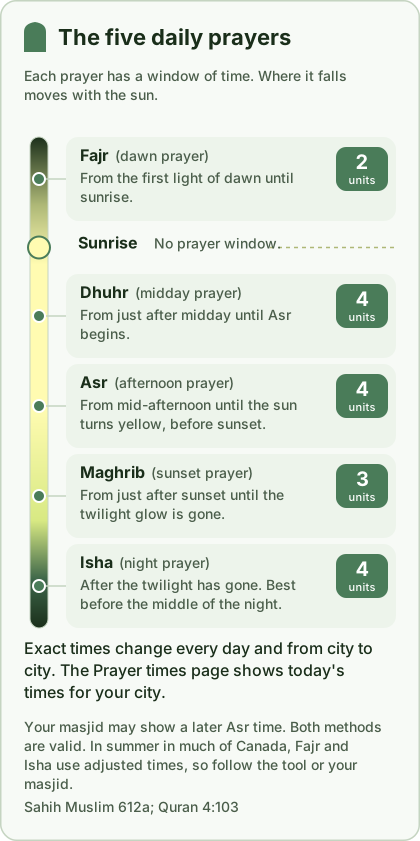
| Pagdarasal sa madaling-araw (Fajr) | Mula sa unang liwanag ng madaling-araw hanggang pagsikat ng araw. | 2 |
| Pagdarasal sa tanghali (Dhuhr) | Mula pagkalampas ng tanghali, kapag nalampasan na ng araw ang pinakamataas na punto nito, hanggang magsimula ang Asr. | 4 |
| Pagdarasal sa hapon (Asr) | Mula kalagitnaan ng hapon hanggang paglubog ng araw. Subukang huwag itong iwan hanggang manilaw ang araw. | 4 |
| Pagdarasal sa paglubog ng araw (Maghrib) | Mula pagkalubog ng araw hanggang mawala ang takipsilim. | 3 |
| Pagdarasal sa gabi (Isha) | Mula nang mawala ang takipsilim hanggang hatinggabi. | 4 |
Puwede kang magdasal anumang oras sa loob ng saklaw na oras, kaya hindi mo kailangang maging eksakto sa minuto. Nagkakaiba ang mga mazhab kung kailan nagsisimula ang Asr (mas huli ang simula ayon sa Hanafi) at sa pinakahuling oras ng Isha. Tuwing tag-init, gumagamit ang malaking bahagi ng Canada ng iniangkop na tuntunin para sa Fajr at Isha, kaya gamitin ang pahina ng oras ng pagdarasal o ang timetable ng masjid sa inyong lugar.
Hindi mo utang ang mga pagdarasal mula sa mga taon bago ka naging Muslim. Sinabi ng Propeta na binubura ng Islam ang nauna rito, kaya magsisimula ka mula ngayon. Idinagdag ng ilang iskolar na hindi rin inaatasang bayaran ang panahong iyon ng balik-Islam na hindi pa alam na obligasyon ang pagdarasal. Kung hindi ka sigurado kung paano ito para sa iyo, magtanong sa isang guro.
Mapa ito, hindi guro. Gamitin ito para matutuhan ang pagkakasunod-sunod, saka hilingin sa isang imam o guro sa inyong lugar na panoorin ka minsan at itama ka.
Hakbang 1 - Bago ang pagdarasal
Mag-wudu, humanap ng malinis na lugar, humarap sa qibla, at itakda sa puso mo kung aling pagdarasal ito. Hindi mo kailangang sabihin nang malakas ang intensyon.
Hakbang 2 - Pambungad na takbir
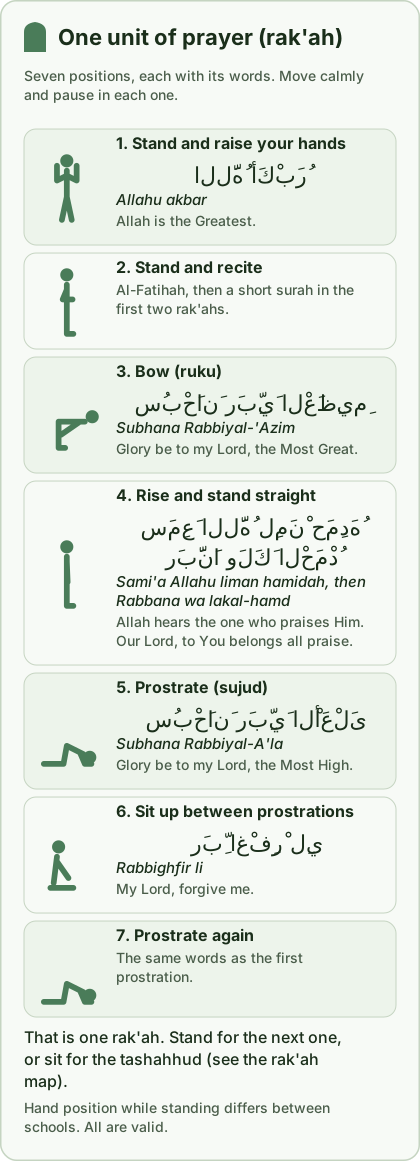
Itaas ang mga kamay at sabihin ang Allahu akbar. Iyon ang nagbubukas ng pagdarasal, at mula roon ay lumabas ka na sa karaniwang usapan at pumasok sa pagsamba.
Hakbang 3 - Pagtayo
Bigkasin ang Al-Fatihah, saka isang maikling surah o ang ilang talatang pinag-aaralan mo. Kung hindi ka pa makabigkas, ipinapaliwanag ng seksyong 'Kung hindi ka pa makabigkas ng Arabic' sa ibaba ang pinapayagan ng mga mazhab (paaralan ng fiqh) sa pansamantala.
Hakbang 4 - Ruku
Yumuko nang patag at matatag ang likod at sabihin ang parirala sa pagyuko. Tumayo habang sinasabi ang Sami'a Allahu liman hamidah, at kapag tuwid ka nang nakatayo, sabihin ang Rabbana wa lakal-hamd. Huminto muna bago bumaba. Huwag itong madaliin para lang matapos.
Hakbang 5 - Sujud
Bumaba sa pagpapatirapa at sabihin ang parirala sa pagpapatirapa. Umupo at sabihin ang Rabbighfir li, saka magpatirapa sa ikalawang pagkakataon gamit ang parehong parirala. Hayaang mapanatag ang bawat posisyon bago lumipat.
Hakbang 6 - Ikalawang yunit
Tumayo ulit at ulitin ang parehong mga galaw: Al-Fatiha, maikling pagbigkas, ruku, pagtayo ulit, saka dalawang pagpapatirapa.
Hakbang 7 - Tashahhud
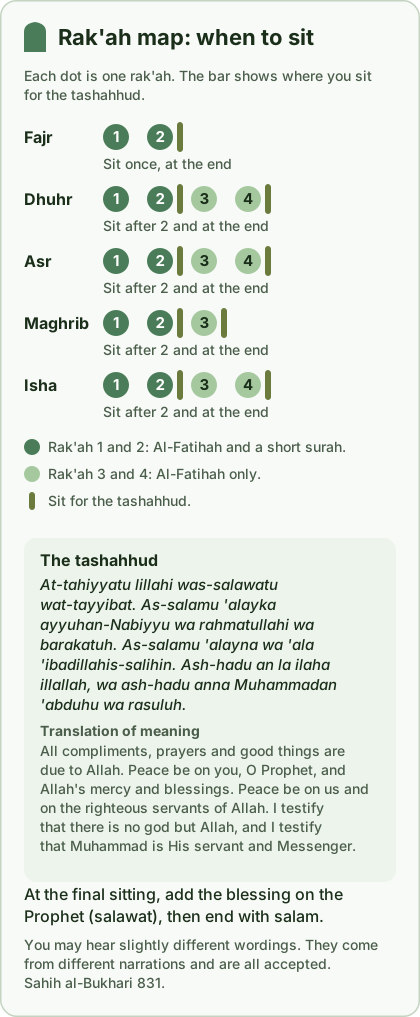
Pagkatapos ng ikalawang rak'ah, umupo at bigkasin ang tashahhud. Sa pagdarasal na may dalawang rak'ah, ito ang huling pag-upo, kaya idagdag ang pagpapala sa Propeta (salawat) bago ang salam. Sa pagdarasal na may tatlo o apat na rak'ah, mas maikli ang unang pag-upong ito, at tatayo ka ulit pagkatapos. Ipinapakita ng mapa ng rak'ah sa ibaba kung saan tumatapat ang bawat pag-upo.
Hakbang 8 - Taslim
Lumingon sa kanan, saka sa kaliwa, habang ibinibigay ang pagbati ng kapayapaan sa bawat pagkakataon. Doon natatapos ang pagdarasal. Umupo nang saglit bago tumayo at bumalik sa araw mo.
Mas madaling sundan ang mapa sa itaas kapag nakita mo na minsan ang mga galaw. Pumili ng isang pagdarasal sa listahan sa ilalim ng video kung ilang minuto lang ang gusto mo.
Tumalon sa isang bahagi
Maikli ang kabanata ng Asr dahil ginagawa ang Asr sa parehong paraan ng Dhuhr. Sinusunod ng video ang gawi ng iisang mazhab, at normal ang maliliit na pagkakaiba ng mga mazhab. Awtomatikong ginawa ang mga caption.
Panoorin sa YouTube(magbubukas sa bagong tab)
Walang naglo-load mula sa YouTube hangga't hindi mo pinipindot ang play. Pagkatapos noon, magpe-play ang video sa privacy-enhanced player ng YouTube. Kung ayaw mag-play ng video o offline ka, gamitin ang link na Panoorin sa YouTube. Higit pa sa aming patakaran sa privacy.
Nasa bawat card ang Arabic, ang transliterasyon at ang kahulugan. Kapag Quran ang teksto, salin ng kahulugan ang Filipino para matulungan kang umunawa, at ang Arabic ang Quran.
Simula ng pagdarasal
اللَّهُ أَكْبَرُ
Transliterasyon
Allahu akbar
Kahulugan
Ang Allah ay Pinakadakila.
Tala para sa baguhan
Ito ang unang pariralang pag-aaralan. Sabihin ito nang malinaw at hindi nagmamadali. Kusang gaganda ang punto mo.
Bawat rak'ah
بِسْمِ اللَّهِ الرَّحْمَٰنِ الرَّحِيمِ الْحَمْدُ لِلَّهِ رَبِّ الْعَالَمِينَ الرَّحْمَٰنِ الرَّحِيمِ مَالِكِ يَوْمِ الدِّينِ إِيَّاكَ نَعْبُدُ وَإِيَّاكَ نَسْتَعِينُ اهْدِنَا الصِّرَاطَ الْمُسْتَقِيمَ صِرَاطَ الَّذِينَ أَنْعَمْتَ عَلَيْهِمْ غَيْرِ الْمَغْضُوبِ عَلَيْهِمْ وَلَا الضَّالِّينَ
Transliterasyon
Bismillahir-Rahmanir-Rahim. Alhamdu lillahi Rabbil-'alamin. Ar-Rahmanir-Rahim. Maliki yawmid-din. Iyyaka na'budu wa iyyaka nasta'in. Ihdinas-siratal-mustaqim. Siratal-ladhina an'amta 'alayhim ghayril-maghdubi 'alayhim wa lad-dallin.
Kahulugan
Salin ng kahulugan: sa Allah ang papuri, pagsamba at tulong, at hinihiling namin sa Kanya na gabayan kami sa tuwid na landas.
Tala para sa baguhan
Ang Al-Fatiha ang unang tunay na layunin sa pagsasaulo. Isa-isahin ang mga parirala, at tanungin ang isang guro kung ano ang bibigkasin habang pinag-aaralan mo pa ito. Sa sama-samang pagdarasal, kapag natapos ng imam ang Al-Fatihah at nagsabi ng Ameen (O Allah, tugunin Mo), sabihin ang Ameen kasabay niya. Kung may tanong ka tungkol sa pagsasabi nito kapag mag-isa kang nagdarasal, magtanong sa isang guro.
Pagkatapos ng Al-Fatiha sa unang dalawang rak'ah
قُلْ هُوَ اللَّهُ أَحَدٌ اللَّهُ الصَّمَدُ لَمْ يَلِدْ وَلَمْ يُولَدْ وَلَمْ يَكُن لَّهُ كُفُوًا أَحَدٌ
Transliterasyon
Qul huwa Allahu ahad. Allahus-samad. Lam yalid wa lam yulad. Wa lam yakun lahu kufuwan ahad.
Kahulugan
Salin ng kahulugan: Iisa ang Allah, sapat sa Kanyang sarili, hindi gaya ng nilikha, at walang anumang maihahambing sa Kanya.
Tala para sa baguhan
Dito nagsisimula ang karamihan ng baguhan. Maikli ito, at ipinapahayag nito ang kaisahan ng Allah sa apat na linya.
Pagkatapos ng Al-Fatiha sa unang dalawang rak'ah
وَالْعَصْرِ إِنَّ الْإِنسَانَ لَفِي خُسْرٍ إِلَّا الَّذِينَ آمَنُوا وَعَمِلُوا الصَّالِحَاتِ وَتَوَاصَوْا بِالْحَقِّ وَتَوَاصَوْا بِالصَّبْرِ
Transliterasyon
Wal-'asr. Innal-insana lafi khusr. Illal-ladhina amanu wa 'amilus-salihat, wa tawasaw bil-haqqi wa tawasaw bis-sabr.
Kahulugan
Salin ng kahulugan: nasa pagkalugi ang mga tao maliban sa mga naniniwala, gumagawa ng mabuti, at naghihikayat sa katotohanan at pagtitiis.
Tala para sa baguhan
Pag-aralan ang isang maikling surah sa bawat pagkakataon. Mas makakatulong sa iyo ang pakikinig muna sa isang maaasahang tagabigkas (qari) kaysa pagmamadali sa ilang kabanata.
Habang nakayuko
سُبْحَانَ رَبِّيَ الْعَظِيمِ
Transliterasyon
Subhana Rabbiyal-'Azim
Kahulugan
Luwalhati sa aking Panginoon, ang Pinakadakila.
Tala para sa baguhan
Itinuturo ng karamihan ng gabay na sabihin ito nang tatlong beses. Habang natututo ka, magandang simula ang isang malinaw na pag-uulit. Itanong sa guro ang mga detalye.
Pag-angat mula sa ruku
سَمِعَ اللَّهُ لِمَنْ حَمِدَهُ رَبَّنَا وَلَكَ الْحَمْدُ
Transliterasyon
Sami'a Allahu liman hamidah. Rabbana wa lakal-hamd.
Kahulugan
Naririnig ng Allah ang pumupuri sa Kanya. Aming Panginoon, at sa Iyo ang lahat ng papuri.
Tala para sa baguhan
Sabihin ang unang linya habang tumatayo ka at ang ikalawa kapag tuwid ka nang nakatayo. Maririnig mo rin ang 'Rabbana lakal-hamd' nang walang 'wa'. Parehong nasa hadith ang dalawang pananalita.
Habang nagpapatirapa
سُبْحَانَ رَبِّيَ الْأَعْلَى
Transliterasyon
Subhana Rabbiyal-A'la
Kahulugan
Luwalhati sa aking Panginoon, ang Pinakamataas.
Tala para sa baguhan
Kakaiba ang pakiramdam ng sujud sa mga unang ilang beses. Gumalaw sa bilis na komportable sa katawan mo, huminto kapag nakababa ka na, at pag-aralan ang parirala. Hindi pagkukulang ang pagiging mabagal.
Sa pagitan ng una at ikalawang sujud
رَبِّ اغْفِرْ لِي
Transliterasyon
Rabbighfir li
Kahulugan
Panginoon ko, patawarin Mo ako.
Tala para sa baguhan
Dalawang salita, at inulit ito ng Propeta. Sabihin ito nang isa o dalawang beses. Maipapakita sa iyo ng isang guro ang mas mahabang bersyon sa kalaunan kung gusto mo.
Bawat pag-upo: pagkatapos ng ikalawang rak'ah at sa dulo
التَّحِيَّاتُ لِلَّهِ وَالصَّلَوَاتُ وَالطَّيِّبَاتُ السَّلَامُ عَلَيْكَ أَيُّهَا النَّبِيُّ وَرَحْمَةُ اللَّهِ وَبَرَكَاتُهُ السَّلَامُ عَلَيْنَا وَعَلَى عِبَادِ اللَّهِ الصَّالِحِينَ أَشْهَدُ أَنْ لَا إِلَٰهَ إِلَّا اللَّهُ وَأَشْهَدُ أَنَّ مُحَمَّدًا عَبْدُهُ وَرَسُولُهُ
Transliterasyon
At-tahiyyatu lillahi was-salawatu wat-tayyibat. As-salamu 'alayka ayyuhan-Nabiyyu wa rahmatullahi wa barakatuh. As-salamu 'alayna wa 'ala 'ibadillahis-salihin. Ash-hadu an la ilaha illallah, wa ash-hadu anna Muhammadan 'abduhu wa rasuluh.
Kahulugan
Para sa Allah ang lahat ng pagbati, panalangin at mabubuting bagay. Sumaiyo nawa ang kapayapaan, O Propeta, at ang awa at pagpapala ng Allah. Sumaamin nawa ang kapayapaan at sa matutuwid na alipin ng Allah. Sumasaksi ako na walang diyos maliban sa Allah, at sumasaksi ako na si Muhammad ang Kanyang alipin at Sugo.
Tala para sa baguhan
Ito ang pananalitang isinalaysay ni Ibn Mas'ud. Maaaring makarinig ka ng bahagyang ibang pananalita mula sa ibang tunay na salaysay, kaya sundin ang guro mo. Pag-aralan ito nang isang linya sa bawat pagkakataon.
Huling pag-upo, pagkatapos ng tashahhud
اللَّهُمَّ صَلِّ عَلَى مُحَمَّدٍ وَعَلَى آلِ مُحَمَّدٍ كَمَا صَلَّيْتَ عَلَى إِبْرَاهِيمَ وَعَلَى آلِ إِبْرَاهِيمَ إِنَّكَ حَمِيدٌ مَجِيدٌ اللَّهُمَّ بَارِكْ عَلَى مُحَمَّدٍ وَعَلَى آلِ مُحَمَّدٍ كَمَا بَارَكْتَ عَلَى إِبْرَاهِيمَ وَعَلَى آلِ إِبْرَاهِيمَ إِنَّكَ حَمِيدٌ مَجِيدٌ
Transliterasyon
Allahumma salli 'ala Muhammadin wa 'ala ali Muhammad, kama sallayta 'ala Ibrahima wa 'ala ali Ibrahim, innaka Hamidun Majid. Allahumma barik 'ala Muhammadin wa 'ala ali Muhammad, kama barakta 'ala Ibrahima wa 'ala ali Ibrahim, innaka Hamidun Majid.
Kahulugan
O Allah, ipadala Mo ang Iyong awa kay Muhammad at sa pamilya ni Muhammad, gaya ng pagpapadala Mo ng Iyong awa kay Ibrahim at sa pamilya ni Ibrahim. Ikaw ay Kapuri-puri at Maluwalhati. O Allah, ipadala Mo ang Iyong pagpapala kay Muhammad at sa pamilya ni Muhammad, gaya ng pagpapadala Mo ng Iyong pagpapala kay Ibrahim at sa pamilya ni Ibrahim. Ikaw ay Kapuri-puri at Maluwalhati.
Tala para sa baguhan
Sabihin ito sa huling pag-upo, pagkatapos ng tashahhud at bago ang salam. Nagkakaiba ang mga mazhab kung sinasabi rin ito sa unang pag-upo ng mas mahabang pagdarasal, kaya itanong sa guro mo.
Pagtatapos ng pagdarasal
السَّلَامُ عَلَيْكُمْ وَرَحْمَةُ اللَّهِ
Transliterasyon
As-salamu 'alaykum wa rahmatullah
Kahulugan
Sumainyo nawa ang kapayapaan at ang awa ng Allah.
Tala para sa baguhan
Ito ang nagsasara ng pagdarasal. Lumingon nang marahan sa bawat panig. Hindi mo kailangang gawing malaking galaw ito.
Nagtatapos ang bawat pagdarasal sa isang pag-upo. May mas maikling pag-upo rin pagkatapos ng ikalawang rak'ah ang mga pagdarasal na may tatlo o apat na rak'ah.
Maiikling aralin mula sa Islamwise, isang proyekto para sa bagong Muslim kasama ang Green Lane Masjid. Binibigkas ng bawat isa ang isang parirala nang dahan-dahan at ipinapaliwanag ang kahulugan nito.
Panoorin sa YouTube(magbubukas sa bagong tab)
Walang naglo-load mula sa YouTube hangga't hindi mo pinipindot ang play. Pagkatapos noon, magpe-play ang video sa privacy-enhanced player ng YouTube. Kung ayaw mag-play ng video o offline ka, gamitin ang link na Panoorin sa YouTube. Higit pa sa aming patakaran sa privacy.
Isang pananaw lamang sa mga mazhab ang paggamit ng mga pariralang ito habang natututo. Tingnan ang seksyon tungkol sa pagdarasal bago ka makabigkas.
Panoorin sa YouTube(magbubukas sa bagong tab)
Walang naglo-load mula sa YouTube hangga't hindi mo pinipindot ang play. Pagkatapos noon, magpe-play ang video sa privacy-enhanced player ng YouTube. Kung ayaw mag-play ng video o offline ka, gamitin ang link na Panoorin sa YouTube. Higit pa sa aming patakaran sa privacy.
29 na maiikling aralin, isang parirala sa bawat pagkakataon, kasama ang bawat talata ng Al-Fatihah, ang tashahhud at ang salawat.
Buksan ang serye sa YouTubePangkalahatang-ideya ito para sa baguhan. Nagkakaiba ang mga detalye ayon sa mazhab (paaralan ng fiqh) at ayon sa kalagayan.
Sumasagabal ang totoong buhay sa pagdarasal. Hanapin dito ang sitwasyon mo at dumiretso sa sagot.
Kung nakalimutan mo ang isang bahagi ng pagdarasal, nakapagdagdag ka nang hindi sinasadya, o nawala ka sa bilang ng rak'ah, may simpleng lunas: dalawang dagdag na pagpapatirapa na tinatawag na sujud al-sahw, ang pagpapatirapa dahil sa pagkalimot. Para sa maraming pagkakamali, hindi mo kailangang simulan ulit ang pagdarasal.
Habang bago ka pa, tapusin nang mahinahon at itanong sa guro ang partikular na pagkakamali pagkatapos. Walang umaasang alam mo na ang bawat tuntunin sa mga unang buwan mo.
Nangyayari sa lahat ang pagpasok sa masjid habang nagsimula na ang pagdarasal. Sinabi ng Propeta (sumakanya nawa ang kapayapaan) na dumating nang mahinahon, idasal ang naabutan mo at kumpletuhin ang nalampasan mo (Sahih al-Bukhari 636).
Hilingin sa isang lokal na imam na ituro sa iyo nang isang beses ang pagsali nang huli. Limang minuto lang ito at malaking pag-aalala ang maiiwasan.
Puwede kang magdasal halos kahit saan basta malinis. Pinadadali ng ilang maliliit na bagay sa bag mo ang pagdarasal sa trabaho, sa paaralan o sa biyahe.
Dinadasal nang nakatayo ang pagdarasal para sa patay, sa likod ng imam, nang walang pagyuko at walang pagpapatirapa. Maikli ito, kadalasan ay ilang minuto lang. May gantimpala ang pagdalo rito, at mas malaki pa ang gantimpala ng pananatili hanggang sa libing (Sahih al-Bukhari 1325).
Kung may kakilala kang namatay, masasabi sa iyo ng lokal na masjid kung kailan at saan ang pagdarasal para sa patay.
Kung pinahihirap ng sakit, karamdaman o kapansanan ang pagtayo, pagyuko o pagpapatirapa, magdasal sa paraang kaya ng katawan mo. Sinabi ng Propeta sa isang kasamahang may sakit na magdasal nang nakatayo, at kung hindi kaya, nang nakaupo, at kung hindi pa rin kaya, nang nakahiga nang patagilid.
Mapapanood ka ng isang lokal na imam o guro na magdasal nang isang beses at matutulungan kang magpasya kung ano ang gumagana para sa katawan mo. Hindi mo kailanman kailangang tiisin ang sakit para mabilang ang pagdarasal mo. Sa ospital, magdasal sa kama ayon sa makakaya mo, at tanungin ang mga nurse kung may spiritual care team ang ospital.
Tumalon sa isang bahagi
Ipinapakita ang pagdarasal sa sahig, sa silya, nang nakatayo nang hindi yumuyuko, at nang nakahiga sa kama.
Panoorin sa YouTube(magbubukas sa bagong tab)
Walang naglo-load mula sa YouTube hangga't hindi mo pinipindot ang play. Pagkatapos noon, magpe-play ang video sa privacy-enhanced player ng YouTube. Kung ayaw mag-play ng video o offline ka, gamitin ang link na Panoorin sa YouTube. Higit pa sa aming patakaran sa privacy.
Isang maikling ikalawang pagpapakita, kasama ang pagdarasal sa silya sa hanay ng masjid.
Tapusin nang mahinahon ang pagdarasal, saka itanong pagkatapos ang partikular na pagkakamaling iyon. Kadalasang mas malaki ang nawawala sa iyo dahil sa pagkataranta kaysa sa mismong pagkakamali.
Sa pag-uulit lang gumaganda ang pagbigkas. Alam ng Allah ang pagkakaiba ng taong hindi nagsisikap at ng taong natututo pa.
Kadalasang balido ang lahat ng pagkakaibang iyon, at wala sa mga ito ang dahilan para tumigil sa pagdarasal. Matutuhan ang isang maaasahang paraan para sa baguhan, at magtanong sa guro bago lumipat ulit.
Bumagal hanggang malinaw na hiwalay ang bawat posisyon. Mas marami kang natututuhan sa maikli at mahinahong pagdarasal kaysa sa mabilis at balisang pagdarasal.
Kasama ito para sa baguhan. Nasuri na ang mga sanggunian. Kailangan pa ring suriin ng isang kwalipikado ang mga personal na hatol sa pagdarasal, mga detalye ng bawat mazhab, mga akomodasyon sa kapansanan at mga di-pangkaraniwang sitwasyon.
Quran.com - Sanggunian sa teksto at salin ng Quran
Ang sanggunian para sa tekstong Arabic ng Al-Fatiha, na ginagamit sa pagbigkas sa pagdarasal at sa dua para sa patnubay. Salin ng kahulugan ang pananalita.
Quran.com - Sanggunian sa teksto at salin ng Quran
Ginamit bilang halimbawa ng maikling surah sa kasama sa salah. Salin ng kahulugan ang pananalita.
Quran.com - Sanggunian sa teksto at salin ng Quran
Ginamit bilang halimbawa ng maikling surah sa kasama sa salah. Salin ng kahulugan ang pananalita.
Sunnah.com - Sanggunian sa hadith
Binanggit para sa prinsipyong natututuhan ang pagdarasal mula sa itinurong gawi ng Propeta, habang iniiwan sa mga kwalipikadong guro ang mga detalye para sa baguhan.
New Muslim Guide - Gabay sa pagdarasal para sa baguhan
Binanggit para sa oryentasyon ng baguhan sa pagdarasal at sa pagkakasunod-sunod nito, habang iniiwan sa mga kwalipikadong guro ang mga hatol at personal na kalagayan.
Sunnah.com - Sanggunian sa dua at dhikr
Ang sanggunian para sa parirala sa ruku para sa baguhan sa kasama sa salah.
Sunnah.com - Sanggunian sa dua at dhikr
Ang sanggunian para sa parirala sa sujud para sa baguhan sa kasama sa salah.
Sunnah.com - Sanggunian sa hadith
Ang sanggunian para sa pangkalahatang-ideya ng tashahhud, kasama ang paalala na matutuhan ang buong pananalita mula sa kwalipikadong guro o maaasahang recording.
Sunnah.com - Sanggunian sa hadith
Ang sanggunian para sa salam na sinasabi sa pagtatapos ng pagdarasal.
SeekersGuidance - Kwalipikadong edukasyong Islamiko
Binanggit kung saan humihinto ang gabay at sinasabihan kang magtanong sa isang kwalipikadong iskolar tungkol sa sarili mong sitwasyon.
Green Lane Masjid and Community Centre (Birmingham, UK) - Video (YouTube)
Ipinapakita nang buo ang Fajr, Dhuhr, Maghrib at Isha; 27 segundo ang kabanata ng Asr at malamang na tumutukoy pabalik sa Dhuhr. Mga timestamp ng gumawa: 1:11 bago ka magdasal, 2:23 ang limang pagdarasal, 2:47 glosaryo at pangkalahatang-ideya ng rak'ah, 3:48 Fajr, 11:27 Dhuhr, 22:31 Asr, 22:58 Maghrib, 32:59 Isha. Awtomatikong ginawang caption sa Ingles lamang. Sumusunod sa gawi ng iisang mazhab. Naka-embed sa privacy-enhanced player ng YouTube (youtube-nocookie.com) at naglo-load lamang kapag pinindot mo ang play. YouTube Standard Licence; pinapayagan ng nag-upload ang pag-embed (nasuri noong 2026-09-23). Walang karapatang mag-download o mag-upload muli.
Islamwise (new Muslim project with Green Lane Masjid) - Video (YouTube)
Episode 10: bawat parirala ng isang rak'ah, mula Allahu akbar hanggang salam, kasama ang komprehensibong pag-alaala. Bahagyang napatunayan; posisyon sa fiqh na kailangang suriin ang paggamit ng mga pariralang pag-alaala habang pinag-aaralan ang Al-Fatihah. Naka-embed sa privacy-enhanced player ng YouTube (youtube-nocookie.com) at naglo-load lamang kapag pinindot mo ang play. YouTube Standard Licence; pinapayagan ng nag-upload ang pag-embed (nasuri noong 2026-09-23). Walang karapatang mag-download o mag-upload muli.
Islamwise (new Muslim project with Green Lane Masjid) - Video (YouTube)
Episode 3: limang parirala (SubhanAllah, Alhamdulillah, La ilaha illallah, Allahu akbar, La hawla wa la quwwata illa billah) na gagamitin sa mga posisyon ng pagdarasal hanggang matutuhan ang Al-Fatihah. Isang posisyon sa fiqh; nagkakaiba ang mga detalye ayon sa mazhab. Naka-embed sa privacy-enhanced player ng YouTube (youtube-nocookie.com) at naglo-load lamang kapag pinindot mo ang play. YouTube Standard Licence; pinapayagan ng nag-upload ang pag-embed (nasuri noong 2026-09-23). Walang karapatang mag-download o mag-upload muli.
Islamwise (new Muslim project with Green Lane Masjid) - Video (YouTube)
Mga aralin parirala por parirala tungkol sa sinasabi sa pagdarasal, Al-Fatihah talata por talata (episode 11 hanggang 18), ang tashahhud at salawat. Nagli-link ang mga paglalarawan ng episode sa personal na playlist ng isang presenter; gamitin ang playlist na ito ng Islamwise. Bahagyang napatunayan. Naka-link lamang, hindi naka-embed. YouTube Standard Licence; walang karapatang mag-download o mag-upload muli.
Sunnah.com - Sanggunian sa hadith
Sa pagtayo mula sa pagyuko, sinabi ng Propeta ang 'Sami'a Allahu liman hamidah', saka habang nakatayo ang 'Rabbana wa lakal-hamd' (ibinibigay din ng salaysay ang 'Rabbana lakal-hamd'). Sa Sahih al-Bukhari.
Sunnah.com - Sanggunian sa hadith
Sa pagitan ng dalawang pagpapatirapa, sinabi ng Propeta ang 'Rabbighfir li, Rabbighfir li'. Itinuring na Sahih (Darussalam) sa Sunnah.com.
Sunnah.com - Sanggunian sa hadith
Luwalhati sa aking Panginoon ang Pinakadakila sa pagyuko, ang Pinakamataas sa pagpapatirapa, at 'Panginoon ko, patawarin Mo ako' sa pagitan ng mga pagpapatirapa. Itinuring na Sahih (al-Albani) sa Sunnah.com.
Sunnah.com - Sanggunian sa hadith
Ang pananalita ng pagpapala sa Propeta at sa kanyang pamilya, gaya ng kay Ibrahim at sa kanyang pamilya. Sa Sahih al-Bukhari.
Sunnah.com - Sanggunian sa hadith
Itinuro ng Propeta: sabihin ang takbir, bigkasin ang alam mo mula sa Quran, yumuko hanggang mapanatag, tumayo nang tuwid, magpatirapa hanggang mapanatag, umupo hanggang mapanatag. Sa Sahih al-Bukhari.
Sunnah.com - Sanggunian sa hadith
Ang mas mahabang salaysay, na pinangangalanan ang ikalawang pagpapatirapa ng bawat rak'ah. Sa Sahih al-Bukhari.
The Islamic Foundation of Ireland - Booklet para sa baguhan
Imam Yahya M. Al-Hussein, may petsang 1999 ang paunang salita. Bilang ng rak'ah at kung saan tumatapat ang tashahhud sa bawat pagdarasal (Fajr pagkatapos ng ika-2; Dhuhr, Asr at Isha pagkatapos ng ika-2 at ika-4; Maghrib pagkatapos ng ika-2 at ika-3). Kasama sa listahan nito ng sumisira sa wudu ang paghawak sa maselang bahagi at hindi kasama ang pagdurugo at pagsusuka, na hindi pananaw ng Hanafi. Link lamang; walang nakasaad na lisensya.
Sunnah.com - Sanggunian sa hadith
Ang tagubilin ng Propeta: kung may pagdududa kung ilang rak'ah na ang nagawa, bumuo sa kung ano ang sigurado ka at gumawa ng dalawang pagpapatirapa bago ang salam. Sa Sahih Muslim.
Sunnah.com - Sanggunian sa hadith
Matapos magdasal ng limang rak'ah nang hindi sinasadya, gumawa ang Propeta ng dalawang pagpapatirapa pagkatapos ng salam. Sa Sahih al-Bukhari.
SeekersGuidance - Sagot ng mga iskolar
Shaykh Dr. Bassem Itani, 26 Hunyo 2024. Ang paraang Hanafi ng pagpapatirapa dahil sa pagkalimot at kung ano ang nangangailangan nito. Link lamang (all rights reserved).
NewMuslims.com - Aralin
Imam Mufti, 2016. Kailan ginagawa ang pagpapatirapa dahil sa pagkalimot, ang paraan bago at pagkatapos ng salam, at na hindi gumagawa ng sarili niya ang taong nagdarasal sa likod ng imam. Link lamang.
Sunnah.com - Sanggunian sa hadith
Tumatagal ang Fajr hanggang magsimulang sumikat ang araw; ang Dhuhr hanggang dumating ang Asr; ang Asr hanggang manilaw ang araw; ang Maghrib hanggang mawala ang takipsilim; ang Isha hanggang lumipas ang kalahati ng gabi. Sa Sahih Muslim.
Quran.com - Sanggunian sa Quran
'Tungkulin ng mga mananampalataya ang pagdarasal sa mga takdang oras' (The Clear Quran, salin ng kahulugan).
NewMuslims.com - Aralin
Isang talahanayan para sa baguhan ng limang pagdarasal kasama ang bilang ng yunit at saklaw na oras, kasama ang Isha hanggang hatinggabi (maaaring palawigin hanggang madaling-araw kung kailangan). Inililista nito ang pagdarasal sa Arabic bilang kondisyon, na naiiba sa pagpapahintulot ng Hanafi para sa taong hindi pa makabigkas. Link lamang.
Sunnah.com - Sanggunian sa hadith
Sinabi ng Propeta kay Amr ibn al-As: 'Hindi mo ba alam na binubura ng Islam ang lahat ng nakaraang masasamang gawa?' Sa Sahih Muslim.
SeekersGuidance - Sagot ng mga iskolar
Ustadha Shaista Maqbool, sinuri ni Shaykh Faraz Rabbani, 4 Setyembre 2012. Hindi pananagutan ng balik-Islam sa bansang hindi Muslim ang mga pagdarasal mula sa panahong hindi pa niya alam na obligado ang pagdarasal; binabayaran ang mga sumunod na nalampasang pagdarasal sa kayang iskedyul. Sagot sa kontekstong Hanafi; hindi ito direktang tumutukoy sa mga pagdarasal mula bago ang Islam. Link lamang.
Sunnah.com - Sanggunian sa hadith
Sinabi ng Propeta kay Imran ibn Husain, na may sakit: magdasal nang nakatayo, at kung hindi kaya, nang nakaupo, at kung hindi pa rin kaya, nang nakahiga nang patagilid. Sa Sahih al-Bukhari.
SeekersGuidance - Sagot ng mga iskolar
Ustadh Tabraze Azam, 8 Pebrero 2013. Kailan puwedeng iwan ang pagtayo (kawalang-kakayahan, matinding sakit o pagkahilo, takot sa pinsala), pagdarasal sa sahig na may tunay na pagpapatirapa kung kaya, kung hindi ay paggalaw ng ulo, at paggamit ng silya kung mahirap ang pag-upo sa sahig. Link lamang.
SeekersGuidance - Sagot ng mga iskolar
Shaykh Dr. Muhammad Abu Bakr Badhib, 20 Hunyo 2024. Panandalian at pangmatagalang sakit, pagdarasal sa silya o nakahiga nang nakaharap sa qibla, at pagtango na mas mababa ang pagpapatirapa kaysa pagyuko. Link lamang.
Green Lane Masjid and Community Centre (Birmingham, UK) - Video (YouTube)
Ipinapakita ang bawat isa: pagdarasal nang nakaupo sa sahig, sa silya, nakatayo nang hindi yumuyuko at nakahiga sa kama. Mga kabanata sa YouTube: 1:06 nakaupo sa sahig, 2:51 sa silya, 3:35 hindi makayuko, 4:39 nakahiga sa kama. Nagkakaiba ang mga mazhab sa mga detalye tungkol sa silya. Naka-embed sa privacy-enhanced player ng YouTube (youtube-nocookie.com) at naglo-load lamang kapag pinindot mo ang play. YouTube Standard Licence; pinapayagan ng nag-upload ang pag-embed (nasuri noong 2026-09-23). Walang karapatang mag-download o mag-upload muli.
Sheikh Assim al-Hakeem (official channel) - Video (YouTube)
Pagdarasal sa silya kapag hindi makatayo, mag-isa at sa hanay ng masjid. Bahagyang napatunayan; nagkakaiba ang mga mazhab sa mga detalye tungkol sa silya. Naka-link lamang, hindi naka-embed. YouTube Standard Licence; walang karapatang mag-download o mag-upload muli.
Sunnah.com - Sanggunian sa hadith
Sinabi ng isang lalaki na wala siyang maisaulong anuman mula sa Quran at itinuro sa kanya ng Propeta ang SubhanAllah, Alhamdulillah, La ilaha illallah, Allahu akbar, La hawla wa la quwwata illa billah. Itinuring na Hasan (al-Albani) sa Sunnah.com.
SeekersGuidance - Sagot ng mga iskolar
Shaykh Yusuf Weltch, sinuri ni Shaykh Faraz Rabbani, 21 Abril 2024. Hanafi: ang taong hindi pa makabigkas ng Arabic ay puwedeng bumigkas ng salin, o magsabi ng mga pariralang Arabic ng pag-alaala sa halip, na tinatawag nitong mas maingat dahil balido iyon sa parehong mazhab na Hanafi at Shafi'i. Shafi'i: puwedeng basahin ng nag-aaral ang Al-Fatihah mula sa mushaf sa pagdarasal; hindi pinapayagan ang salin. Maliki at Hanbali: hindi balido ang pagbigkas sa ibang wika. Unti-unting pag-aralan ang Al-Fatihah. Link lamang.
SeekersGuidance - Sagot ng mga iskolar
Shaykh Faraz Rabbani, 18 Enero 2012. Hanafi: lubhang di-kanais-nais (makruh) ang paghawak at pagbasa ng Quran sa pagdarasal; balidong dahilan ang pagiging bagong Muslim habang pinag-aaralan ang Al-Fatihah; pag-aralan ang isang maikling talata gaya ng Qul huwa Allahu ahad. Link lamang.
Dar al-Ifta al-Misriyyah - Sagot ng mga iskolar
3 Marso 2015. Ang bagong Muslim na hindi pa makabigkas ng Al-Fatihah ay puwedeng magsabi ng pag-alaala sa Allah sa halip, batay sa ulat ni Abdullah ibn Abi Awfa at kay Ibn Qudamah (Hanbali). Link lamang.
Sunnah.com - Sanggunian sa hadith
Dalawa ang gantimpala ng taong nauutal sa pagbigkas ng Quran at nahihirapan dito. Sa Sahih Muslim.
Sunnah.com - Sanggunian sa hadith
Sahih al-Bukhari 636 (Abu Huraira), sa Sahih al-Bukhari: pagkarinig ng iqamah, maglakad papunta sa pagdarasal nang mahinahon, idasal ang maaabutan mo kasama ng imam at kumpletuhin ang nalampasan mo. Ito ang batayan ng terminong masbuq.
Sunnah.com - Sanggunian sa hadith
Sunan Abi Dawud 893 (Abu Hurairah): kung dumating ka habang nakapatirapa ang imam, magpatirapa kasama niya at huwag itong bilangin. Idinadagdag ng Arabe na sinumang umabot sa pagyuko ay umabot na sa rak'ah. Itinuring na Hasan ni al-Albani.
Sunnah.com - Sanggunian sa hadith
Sahih al-Bukhari 780 (Abu Huraira), sa Sahih al-Bukhari: sabihin ang Ameen kapag sinabi ito ng imam pagkatapos ng Al-Fatihah. Tungkol ang teksto sa pagdarasal sa likod ng imam; hindi nito saklaw ang pagdarasal nang mag-isa o kung gaano kalakas ito sasabihin.
Sunnah.com - Sanggunian sa hadith
Sahih al-Bukhari 725 (Anas): ituwid ang mga hanay; nakatayo ang mga kasamahan nang magkadikit ang balikat at magkadikit ang paa. Sahih.
Sunnah.com - Sanggunian sa hadith
Sa Sahih al-Bukhari (sahih). Ang sinumang pumasok sa masjid ay dapat magdasal ng dalawang rak'ah bago umupo. Hindi ibinibigay ng pahina ang pagkakaiba ng mga paaralan tungkol sa oras nito.
Sunnah.com - Sanggunian sa hadith
Sa Sahih Muslim (sahih). Pumasok ang isang lalaki habang nagbibigay ang Propeta ng sermon sa Biyernes, at sinabihan siyang tumayo at magdasal ng dalawang rak'ah. Magkakaiba ang pananaw ng mga iskolar sa paglalapat nito habang may sermon.
Sunnah.com - Sanggunian sa hadith
Sunan an-Nasa'i 1425 (Abu Hurairah): sinumang umabot sa isang rak'ah ng Jumu'ah ay umabot na rito. Itinuring na Sahih ng Darussalam.
SeekersGuidance - Sagot ng iskolar
Ustadh Tabraze Azam, sinuri ni Shaykh Faraz Rabbani, 15 Enero 2017. Walang pagdarasal o pagsasalita kapag umakyat na ang imam sa pulpito; naaabutan ang pagdarasal tuwing Biyernes kung sumali bago ang huling salam, at dalawang rak'ah ang binabawi.
SeekersGuidance - Sagot ng iskolar
Shaykh Dr. Muhammad Fayez Awad, 26 Disyembre 2024. Naaabutan ang rak'ah kung naabutan ang imam habang nakayuko (nagkakaisa ang mga iskolar dito); inirerekomendang hintayin ang dalawang salam bago tumayo; ang idinasal kasama ng imam ay ang unang bahagi ng sariling pagdarasal.
SeekersGuidance - Sagot ng iskolar
Hinango mula sa Heavenly Ornaments ni Mawlana Ashraf Ali Thanawi, 22 Agosto 2011. Hindi obligado ang pagdarasal tuwing Biyernes sa maysakit, sa naglalakbay, sa babae, sa bata o sa alipin; kung dumalo ang naglalakbay o babae, hindi na kailangan ang Dhuhr; apat na sunnah bago at apat pagkatapos; walang pagdarasal kapag tumayo na ang imam para sa sermon.
SeekersGuidance - Sagot ng iskolar
Shaykha Mona ElZankaly at Saira AbuBakr, inaprubahan ni Shaykh Rami Nsour, 26 Agosto 2013. Ang Witr ang nag-iisang pinagtibay na pang-araw-araw na sunnah; dalawa bago ang Fajr (raghiba); apat bago at pagkatapos ng Dhuhr, apat bago ang Asr, dalawa hanggang anim pagkatapos ng Maghrib; walang itinakda para sa Jumu'ah; walang kusang-loob na pagdarasal kapag pumasok na ang imam para sa sermon.
Quran.com - Sanggunian sa Quran
Isuot ang inyong kagandahan sa bawat lugar ng pagdarasal (Al-A'raf 7:31). Ginamit para sa maayos na pananamit sa pagdarasal.
Sunnah.com - Sanggunian sa hadith
Sunan Abi Dawud 641 (Aisha): hindi tinatanggap ang pagdarasal ng babaeng lampas na sa pagdadalaga kung walang takip sa ulo. Itinuring na Sahih ni al-Albani.
Sunnah.com - Sanggunian sa hadith
Sunan Abi Dawud 650 (Abu Sa'id): nagdasal ang Propeta nang suot ang kanyang sandalyas at sinabihan ang mga tao na tingnan muna kung may dumi ang sa kanila, saka magdasal nang suot ang mga ito. Itinuring na Sahih ni al-Albani.
Sunnah.com - Sanggunian sa hadith
Sunan Abi Dawud 695, itinuring na Sahih ni al-Albani: kapag nagdarasal ka na nakaharap sa isang harang (sutrah), lumapit ka rito.
Quran.com - Sanggunian sa Quran
Iharap ang inyong mukha sa al-Masjid al-Haram saanman kayo naroroon (Al-Baqarah 2:144). Ang batayan ng pagharap sa qibla.
Sunnah.com - Sanggunian sa hadith
Jami at-Tirmidhi 344 (Abu Hurairah): qibla ang nasa pagitan ng silangan at kanluran. Itinuring na Sahih ng Darussalam. Sinabi ito sa Madinah; inilalapat ito ng mga iskolar sa taong hindi nakikita ang Ka'bah, na humaharap sa pangkalahatang direksyon nito.
Sunnah.com - Sanggunian sa hadith
Sahih Muslim 560a (Aisha): walang pagdarasal kapag nakahain na ang pagkain, o kapag pinipigil ng tao ang pagdumi o pag-ihi. Sahih.
Sunnah.com - Sanggunian sa hadith
Sahih al-Bukhari 1333 (Abu Hurairah): pinangunahan ng Propeta ang pagdarasal para sa patay para kay al-Najashi nang nakahanay at nagsabi ng apat na takbir. Sahih.
Sunnah.com - Sanggunian sa hadith
Sahih al-Bukhari 1325 (Abu Hurairah): isang qirat na gantimpala sa pagdalo sa pagdarasal para sa patay, at dalawa sa pananatili hanggang sa paglilibing. Sahih.
IslamQA - Sagot ng iskolar
Sa ilalim ng pangangasiwa ni Shaykh Muhammad Salih al-Munajjid. Apat na takbir: Al-Fatihah pagkatapos ng una, pagpapala sa Propeta pagkatapos ng ikalawa, dua para sa namatay pagkatapos ng ikatlo, saka ang ikaapat at ang salam. Isang paraan lamang ang sinusunod nito; magkakaiba ang ibang paaralan sa mga detalye.